
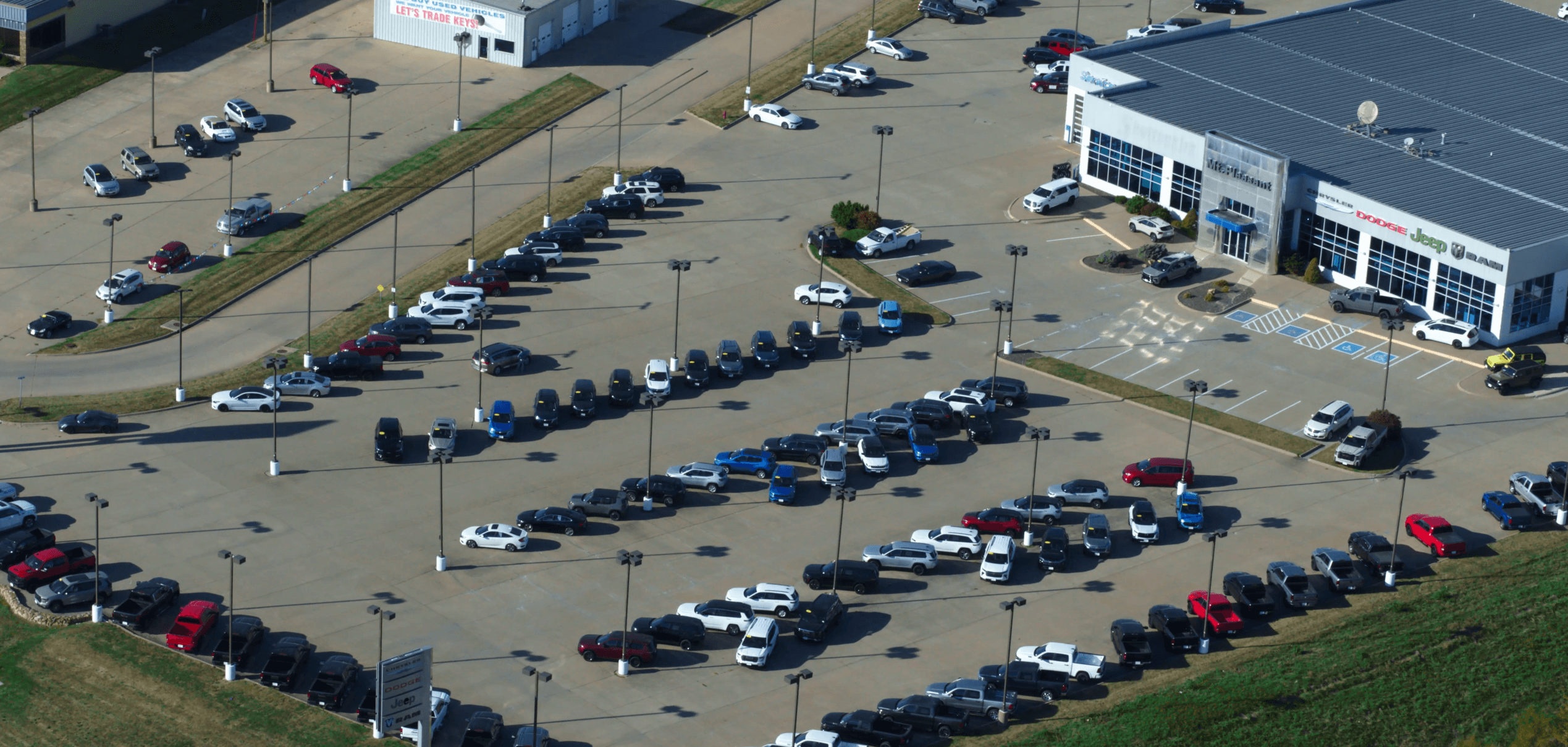
Mt. Pleasant Chevy GMC CDJR, Mt. Pleasant, Iowa. Photo: Sweet Dreams US LLC
Alternative Investments in 2026: Why Auto Dealerships Outperform Traditional Allocations
When equities are volatile and real estate cap rates compress, hard-asset-backed dealership investments offer a rare combination of yield, downside protection, and operational upside.
The 2026 investment landscape has forced accredited investors to confront an uncomfortable truth: the traditional 60/40 portfolio is no longer sufficient. Bond yields have stabilized but remain historically compressed on a real basis. Public equities carry valuations that assume perfection. And the alternative investment categories that absorbed trillions over the last decade — private credit, venture, and multifamily real estate — are showing signs of overcrowding.
Against that backdrop, a growing number of sophisticated allocators are discovering an asset class that has operated quietly and profitably for decades without attracting the capital flows it deserves: the franchised automobile dealership.
The Structural Case for Dealerships in a Late-Cycle Environment
Every alternative investment must answer one question before anything else: what happens when the economy turns? For dealerships, the answer is built into the business model. The four-legged revenue structure — new sales, used sales, finance and insurance, and fixed operations — creates a natural hedge that activates precisely when traditional investments falter. When consumers stop buying new vehicles, they repair the ones they own. Service and parts revenue rises. Used vehicle demand increases as buyers seek lower-cost alternatives. F&I penetration improves as lenders tighten and buyers need more protection products.
This is not theoretical. During the 2008 financial crisis, new vehicle unit sales collapsed by 35%. Yet the average franchised dealer maintained positive net pretax profit every single year through the downturn. No other retail category can make that claim. The reason is fixed absorption — the ability of the service department alone to cover the dealership’s entire fixed overhead. A well-run dealership with fixed absorption above 80% effectively neutralizes the downside of a sales recession.
Why Traditional Alternatives Are Losing Their Edge
Private equity as an asset class has delivered strong historical returns, but the denominator effect and fundraising compression of 2023–2025 exposed vulnerabilities. Dry powder exceeded $2 trillion globally by late 2024, driving purchase multiples higher and compressing forward returns. In real estate, multifamily cap rates in primary markets remain in the high-4% to low-5% range despite rising rates — a structural compression driven by capital oversupply rather than asset quality. Self-storage, once the darling of alternative real estate, has seen occupancy rates normalize and cap rates rise to the mid-5% range without a corresponding improvement in operating fundamentals.
Franchise dealerships, by contrast, trade at valuations that reflect operational complexity rather than capital competition. Acquisition multiples for single-point dealerships in secondary and tertiary markets — the precise segment the Prime Dealer Equity Fund targets — remain between 3x and 5x adjusted pretax earnings. That multiple includes the operational business. The underlying real estate, typically owned by the dealer, adds a tangible asset floor that institutional investors in other categories would pay a premium to access.
Hard Asset Backing That Actually Means Something
The term “hard asset backed” gets used loosely in alternative investment marketing. In dealership investing, it is literal. Every acquisition includes land, buildings, parts inventory, vehicle inventory financed on floor plan, and specialized equipment. The real estate alone typically represents 40% to 60% of total acquisition cost, and it appreciates independently of the operating business. If the business were to cease operations entirely — a scenario franchise law makes nearly impossible — the real estate retains value as commercial property in a community that depends on automotive retail.
This is the distinction that separates dealership investing from private credit, venture capital, or even most private equity strategies. The downside is structurally floored by tangible assets. The upside is driven by operational improvement. And the yield — the Prime Dealer Equity Fund targets an 8% preferred annual distribution — is generated by a business with four distinct revenue engines, not a single tenant or a single revenue stream.
The Timing Advantage for 2026 Capital
Capital entering the dealership acquisition space in 2026 arrives at a structural inflection. The generational transfer crisis has pushed buy-sell transaction volume to record levels. Seller motivation is high. Manufacturer-required facility upgrades have created additional pressure on undercapitalized family operators. And the competitive landscape for acquisition capital remains thin relative to the opportunity set — most private equity firms lack the operational expertise required for manufacturer approval.
For accredited investors seeking alternatives that deliver yield, downside protection, and genuine operational value creation, the franchised auto dealership is not just another option. In the current environment, it may be the best one available.
Prime Dealer Equity Fund is a private equity vehicle co-investing with Coleman Automotive Group in the acquisition and optimization of automotive dealerships across the United States.
For qualified investor inquiries:
→ Contact our investor relations team