
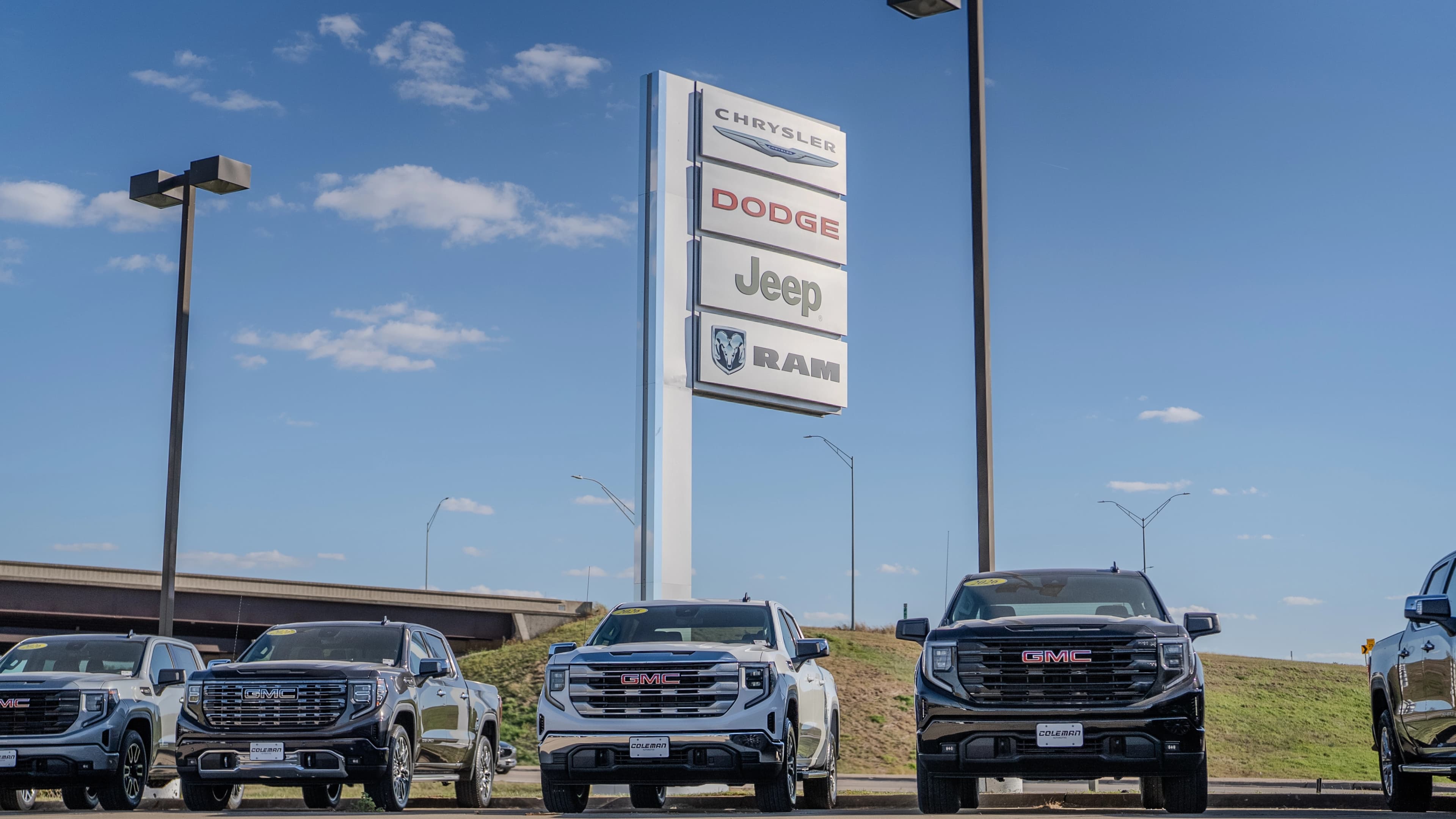
GMC inventory at Mt. Pleasant, Iowa. The land and facilities represent tangible asset value independent of operations. Photo: Sweet Dreams US LLC
Dealership Real Estate: The Hard Asset Backbone of Every Acquisition
Why the land and buildings underneath a dealership provide a tangible floor that most alternative investments lack.
In the universe of alternative investments, few asset classes offer the combination of operational upside and hard-asset security that franchise car dealerships provide. The operational business — new and used vehicle sales, finance products, parts and service — generates the cash flow. But underneath that business sits a tangible asset that has independent value regardless of whether a single car sells: the real estate.
The typical franchise dealership in America occupies between three and ten acres of commercially zoned land, improved with showroom, service, and parts facilities that are purpose-built for automotive retail. Many of these properties are owned free and clear by the dealership principal, particularly among the family-owned stores now coming to market through the generational transfer. Even where debt exists on the real estate, the land and improvements carry appraised values that establish a tangible floor beneath the total investment.
Separating the Real Estate from the Operation
Sophisticated dealership acquirers structure acquisitions to recognize the dual nature of the asset. The real estate is valued independently using traditional commercial appraisal methods — comparable sales, replacement cost, and income capitalization. The business value, or Blue Sky, is valued as a multiple of adjusted pretax earnings. This separation allows the acquirer to understand exactly how much of the purchase price is backed by bricks, mortar, and dirt, and how much represents intangible business value.
In most dealership acquisitions, the real estate component represents 40% to 60% of the total purchase price. This means that even before evaluating the operational cash flow, the investor has a tangible asset base covering roughly half the invested capital. Compare this to a private equity investment in a software company or a service business, where the tangible asset backing is effectively zero and the entire valuation rests on projected future earnings.
The Real Estate as a Valuation Floor
The practical implication for investors is significant. In a worst-case scenario — one where the operational business fails entirely and the franchise is terminated — the real estate remains. The land retains its commercial value. The buildings, while purpose-built for automotive retail, can be repurposed or leased to another dealer, a service center, or an alternative commercial tenant. The investor’s total loss is capped by the residual value of the real property.
This is not a theoretical construct. During the 2008 financial crisis, when multiple domestic franchises were terminated as part of the General Motors and Chrysler bankruptcies, the affected dealerships retained significant value through their real estate holdings. Dealers who lost their franchise agreements were able to sell or lease their properties, recovering a substantial portion of their invested capital from the real estate alone.
How the Fund Captures Real Estate Value
The Prime Dealer Equity Fund structures each co-investment to capture the full value proposition of the underlying real estate. In many acquisitions, the real estate is held in a separate entity from the operating business, creating clean asset segregation that protects the property from operational liabilities. The fund’s preferred equity position benefits from this separation because the tangible asset base supports the overall enterprise value that underlies the preferred return.
For accredited investors evaluating hard-asset-backed alternatives, dealership real estate provides something that most income-generating real property does not: a tenant that operates four distinct profit centers, holds a legally protected franchise territory, and generates recurring service revenue that is counter-cyclical to the broader economy. The real estate is the floor. The operation is the return. Together, they create an investment profile that is uniquely compelling in the current market.
Prime Dealer Equity Fund is a private equity vehicle co-investing with Coleman Automotive Group in the acquisition and optimization of automotive dealerships across the United States.
For qualified investor inquiries:
→ Contact our investor relations team