
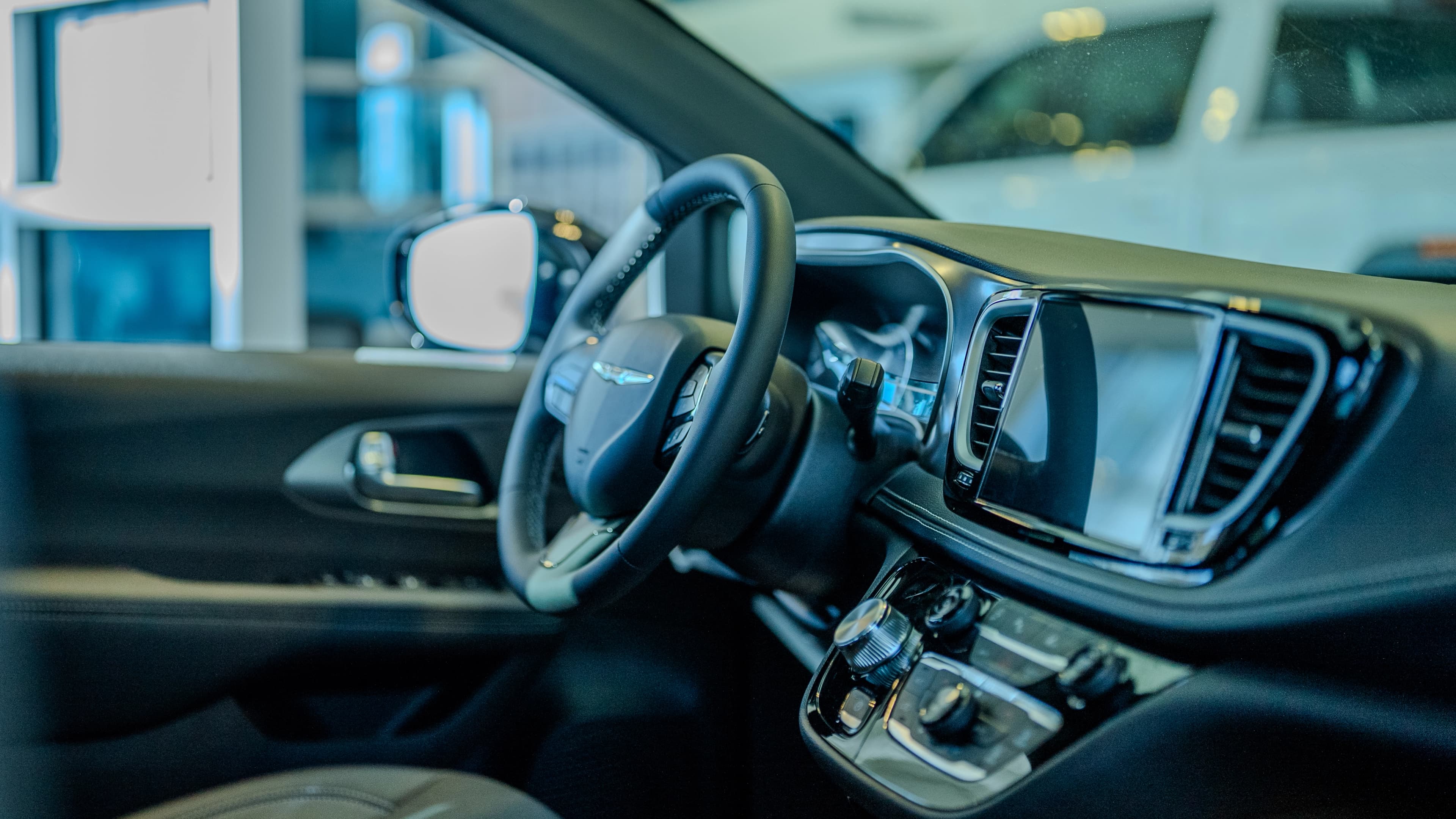
Interior of a Coleman Automotive dealership. The physical plant — land, building, and equipment — provides a tangible value floor that purely operational investments cannot offer. Photo: Sweet Dreams US LLC
Hard Asset Backed Fund: The Real Estate Floor That Protects Dealership Investors
Every dealership acquisition sits on land and inside buildings that retain value independent of the operating business. That tangible floor is the investor’s structural protection.
When private equity funds describe themselves as “hard asset backed,” the claim deserves scrutiny. In many cases, the hard assets are intellectual property valuations, goodwill estimates, or revenue multiples that evaporate under stress. In franchise dealership investing, the hard assets are exactly what the term implies: land, buildings, vehicle inventory, parts inventory, and specialized service equipment. These tangible assets create a downside floor that exists independent of the operating business’s performance — and that floor is the foundational investor protection in the Prime Dealer Equity Fund.
The Real Estate Component: Land and Buildings
In a typical dealership acquisition, the real estate — the land and improvements — represents 40% to 60% of total acquisition cost. This is not a residual value estimate. It is the appraised market value of commercial real property in a community where automotive retail is an essential service. The dealership’s lot, showroom, service bays, body shop, and parts warehouse occupy purpose-built commercial space on commercially zoned land, typically on a main road or auto corridor with high visibility and traffic counts.
This real estate retains value under virtually any operating scenario. If the dealership were to cease operations — a scenario franchise law makes nearly impossible without manufacturer consent — the land and buildings remain valuable commercial property. In secondary and rural markets where Coleman Automotive acquires, the real estate often appreciates because new commercial construction is limited and existing commercial properties are scarce. The investor’s capital is anchored to a tangible asset that has its own independent valuation trajectory.
Inventory as Liquid Collateral
A dealership carries two categories of inventory: vehicle inventory (new and used) and parts inventory. Both are liquid assets that can be converted to cash relatively quickly. New vehicle inventory is financed through floor plan lines provided by manufacturer-affiliated lenders. The floor plan itself is a form of inventory financing that the dealership industry has refined over decades — the vehicles serve as their own collateral, and floor plan payoff occurs automatically when a vehicle is sold.
Parts inventory represents a smaller but significant tangible asset. Manufacturer-authorized parts departments maintain inventory levels that match the service demand of the local vehicle parc. In a wind-down scenario, manufacturers are typically required by franchise law to repurchase unsold parts at cost. This buyback obligation converts parts inventory from a potentially stranded asset into a liquidation-protected one.
Equipment and Specialized Infrastructure
Modern dealership service departments contain specialized equipment worth hundreds of thousands of dollars: vehicle lifts, alignment machines, diagnostic computers, paint booths, and manufacturer-specific tooling. While this equipment depreciates over time, it retains functional value for its useful life and can be resold in secondary markets or included in a franchise transfer. The physical infrastructure of a dealership is not decorative — it is productive capital that generates revenue every day the service department operates.
How Hard Assets Protect Preferred Equity Investors
For investors in the Prime Dealer Equity Fund, the tangible asset base provides a recovery floor in downside scenarios that purely operational investments cannot offer. Consider the contrast: an investment in a software company, a consulting firm, or a financial services business holds value only as long as the business generates revenue. If the business fails, the equity is worthless. There are no hard assets to liquidate, no real estate to sell, no inventory to convert.
A dealership investment is fundamentally different. Even in the worst conceivable scenario — a complete operational failure combined with franchise termination — the land, buildings, and equipment retain tangible value. The real estate can be sold or repurposed. The manufacturer is obligated to repurchase certain inventory. The equipment has resale value. The investor’s capital is not vaporized. It is recoverable to a meaningful degree from the tangible asset base.
The Dual-Layer Return: Asset Appreciation Plus Operational Cash Flow
The most compelling aspect of dealership investing is that the hard asset floor is not the return — it is the protection beneath the return. The actual return is generated by the operational cash flow of the dealership, driven by the four-legged revenue model and enhanced by Coleman Automotive’s operational improvements. The investor receives both: a preferred distribution generated by a performing business and a tangible asset base that provides structural downside protection.
This dual-layer structure — operational yield on top of a hard asset floor — is what makes franchise dealership investing genuinely different from other alternative investments. It is not just an operating business. It is not just real estate. It is both, combined in a structure where the legal protections of franchise law prevent the asset from being replicated, terminated, or competed away. For accredited investors seeking hard asset backing that actually means something, the franchise dealership is the asset class that delivers on the promise.
Prime Dealer Equity Fund is a private equity vehicle co-investing with Coleman Automotive Group in the acquisition and optimization of automotive dealerships across the United States.
For qualified investor inquiries:
→ Contact our investor relations team