
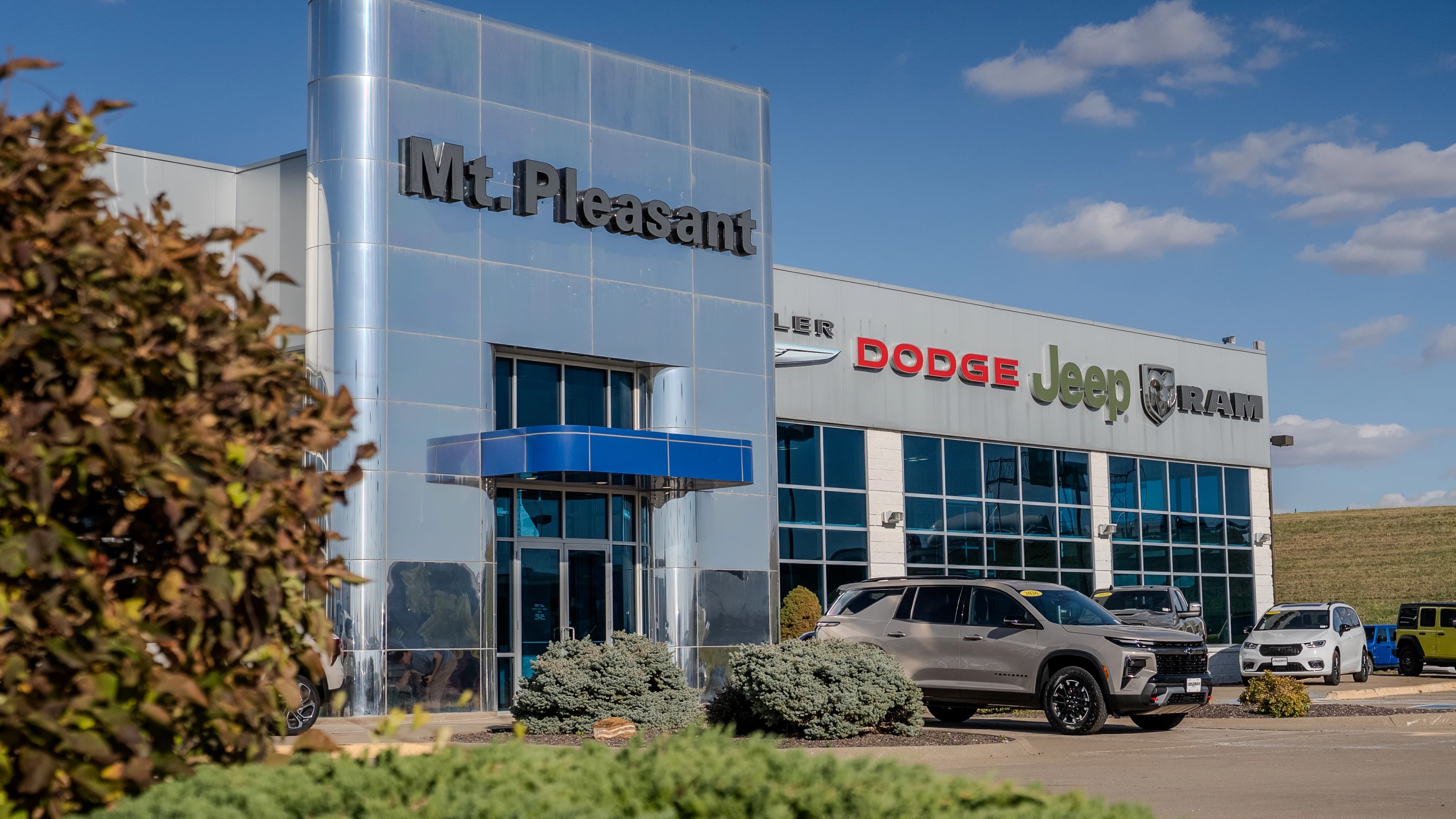
The Mt. Pleasant dealership campus includes the showroom, service center, and lot — physical assets that retain value regardless of any single month’s sales performance. Photo: Sweet Dreams US LLC
Hard Asset Backing: Why the Real Estate Under a Dealership Changes the Risk Profile
Every dealership acquisition includes a tangible floor that most private equity investments lack: the land and buildings the business operates on.
In the alternative investment landscape, the phrase “hard asset backed” gets used liberally. Real estate syndications claim it. Infrastructure funds claim it. Even some venture-adjacent vehicles claim it by pointing to intellectual property or equipment as collateral. But the practical question for any investor is straightforward: if the operational business fails entirely, what do you actually own?
For the vast majority of private equity investments, the answer is disappointing. Growth equity in a technology company evaporates if the product fails. Private credit secured by revenue-based liens depends on revenue continuing to flow. Even many real estate investments are structured so that the investor holds a subordinated equity position behind layers of senior debt, meaning a decline in property value wipes out the equity holder long before it affects the lender.
A franchised car dealership is structurally different. Every acquisition includes three categories of tangible assets that exist independently of the business’s operational performance: the real property (land and buildings), the physical improvements (service bays, paint booths, showroom infrastructure), and the vehicle inventory that sits on the lot. These assets have liquidation value. They can be appraised, insured, and — in a worst-case scenario — sold to recover capital that in other private equity structures would simply be lost.
The Real Estate Component: More Than a Location
In a typical dealership acquisition, the real estate represents a significant portion of the total transaction value. The properties are purpose-built commercial facilities located on major traffic corridors with high visibility and established ingress/egress patterns. They include showrooms, service departments with multiple bays, parts warehouses, and customer-facing facilities that have been specifically designed and permitted for automotive retail use.
This real estate has intrinsic value independent of the dealership business. If the franchise were terminated tomorrow — which, as we have discussed in previous posts, is exceptionally difficult under state franchise law — the land and buildings would retain commercial value as automotive service centers, collision repair facilities, fleet maintenance operations, or general commercial/industrial use. The property does not disappear when the business model changes. It adapts.
In the Coleman Automotive portfolio, the real estate underlying each dealership acquisition is evaluated as a standalone asset as part of the diligence process. What is the assessed value of the land? What is the replacement cost of the improvements? What would the property command in a lease-back or sale scenario independent of the dealership operations? These questions establish a tangible floor beneath the total investment — a recovery baseline that exists regardless of operational performance.
How Hard Assets Change the Investor’s Risk Calculus
For accredited investors accustomed to evaluating risk in terms of downside protection, the hard asset backing of dealership investments changes the fundamental calculus. In a traditional private equity investment, the downside scenario is a total loss of capital. The technology company fails. The development project stalls. The fund returns pennies on the dollar. The investor absorbs a write-off.
In a dealership investment structured through Prime Dealer Equity Fund, the downside scenario is bounded by the tangible asset value. Even in the most adverse outcome — a scenario where the operational business underperforms dramatically and the franchise relationship deteriorates — the underlying real estate, equipment, and residual inventory provide a recovery floor. The investor’s capital is not deployed into an idea or a promise. It is deployed into buildings, land, service bays, and franchise rights that have appraised and insurable value.
This does not mean the investment is risk-free. No investment is. But it means the risk profile is fundamentally different from private equity structures where 100% capital loss is a realistic scenario. The hard assets create a cushion that reduces the severity of downside outcomes — and for investors who have lived through cycles where paper assets evaporated overnight, that cushion is not a minor consideration. It is a defining feature of the allocation.
Combining Operational Upside with Asset Security
The real power of the dealership investment thesis is not the hard assets alone — it is the combination of hard asset security and operational upside within the same vehicle. The real estate provides the floor. The four-legged operational stool — new sales, used sales, F&I, and fixed operations — provides the return. The franchise protections provide the moat. And the co-investment structure ensures that the operator’s capital is at risk alongside the investor’s, aligning incentives from the first dollar deployed.
For accredited investors seeking hard-asset-backed investments that deliver more than a passive yield, the franchise dealership model through Prime Dealer Equity Fund represents a category of alternative investment where the tangible assets secure the downside and the operational execution drives the upside. That combination is rare in private equity — and it is the structural reason we believe dealership investing deserves a place in the portfolios of sophisticated investors who have been underserved by traditional alternatives.
Prime Dealer Equity Fund is a private equity vehicle co-investing with Coleman Automotive Group in the acquisition and optimization of automotive dealerships across the United States.
For qualified investor inquiries:
→ Contact our investor relations team