
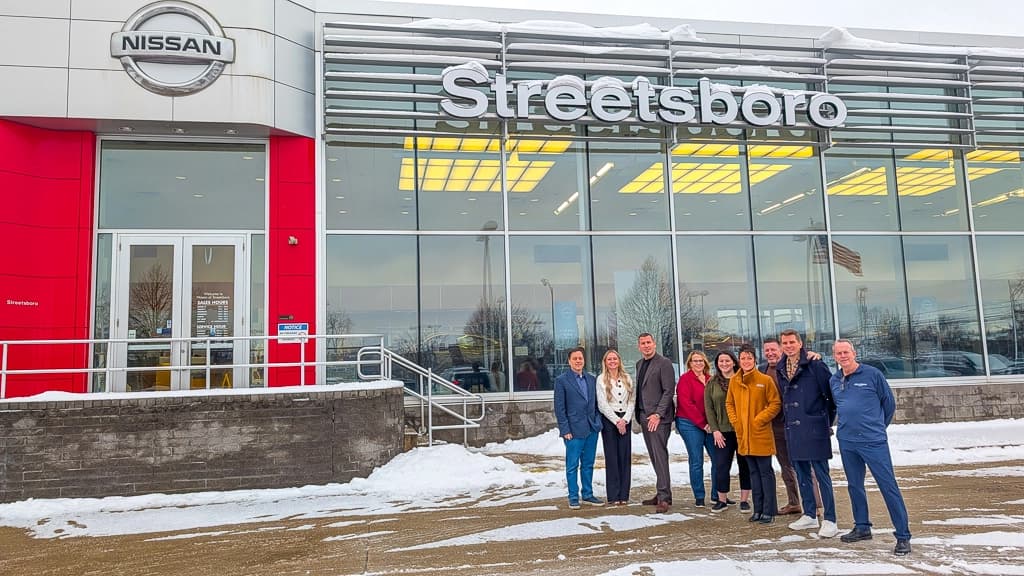
Coleman Automotive’s Streetsboro location. Operational improvements begin on day one of acquisition and produce measurable results within the first quarter. Photo: Sweet Dreams US LLC
Operational Value Creation: Inside Coleman Automotive’s Dealership Turnaround Playbook
The difference between a mediocre dealership and a high-performing one is not the brand on the sign. It is the operator behind it.
The most common mistake in dealership investing is assuming that value is created at the point of acquisition. It is not. Value is created in the months and years after the keys change hands, when the new operator implements the processes, systems, and management discipline that the previous owner deferred, ignored, or never understood. The purchase price determines the entry point. The operator determines the return.
Coleman Automotive Group has developed a 90-day turnaround methodology that is deployed systematically in every acquisition. The methodology targets specific, measurable improvements across all four profit centers — new vehicle sales, used vehicle sales, finance and insurance, and fixed operations — with the goal of producing visible margin expansion within the first quarter of ownership.
Sales Floor: Process Over Personality
The most immediate operational improvement in an acquired dealership is almost always on the sales floor. Family-owned stores frequently operate on a personality-driven sales model — a few star salespeople generate the majority of volume, while the rest of the team underperforms without accountability. This model produces inconsistent results and creates fragility: when a top performer leaves, revenue follows them out the door.
Coleman Automotive replaces personality-driven sales with process-driven sales. Every customer interaction follows a structured road-to-the-sale that is trained, measured, and managed. Lead response times are tracked. Appointment show rates are monitored. Closing ratios are benchmarked against group averages. The result is a sales operation that produces consistent output regardless of individual talent variation. Front-end gross profit per unit typically improves by $200 to $400 within the first 90 days as the team learns to sell on value rather than price.
Finance and Insurance: The Hidden Profit Center
The F&I department is where many family-owned dealerships leave the most money on the table. An undertrained F&I manager who presents two products per customer at low penetration rates is the norm in stores that have not invested in professional development. The difference between a weak F&I operation and a strong one can be $400 to $800 per unit — on the same vehicle, to the same customer, in the same market.
Coleman Automotive’s F&I process includes structured product presentations, compliance-first training, and per-deal performance tracking. The methodology focuses on presenting the right products to the right customers at the right time, which improves per-unit revenue while maintaining CSI scores and regulatory compliance. For investors, F&I improvement is among the highest-return, lowest-cost operational levers available.
Service Department: Building the Countercyclical Engine
Fixed operations is where long-term value lives. Many family-owned dealerships treat the service department as a cost center rather than a profit center — inadequate staffing, minimal marketing, no proactive customer outreach, and service advisors who are order-takers rather than consultants. Coleman Automotive’s approach restructures the department from the ground up.
Service advisor compensation is restructured to incentivize effective labor rate and hours per repair order rather than just volume. Proactive outreach campaigns contact customers based on mileage intervals and service history. Express maintenance lanes are added or expanded to capture the quick-service work that customers otherwise take to independent shops. These initiatives directly target fixed absorption improvement — the metric that determines whether the dealership can cover its overhead from service revenue alone.
Used Vehicle Operations: Margin Through Discipline
Used vehicles represent one of the highest-margin opportunities in auto retail, but only for operators who manage inventory with precision. The biggest destroyer of used vehicle profit is aging inventory — vehicles that sit on the lot for 60, 90, or 120 days, depreciating daily while accruing floor plan interest. Family-owned stores frequently carry aged inventory because the owner is emotionally attached to pricing decisions and unwilling to take a loss.
Coleman Automotive implements a strict 45-day turn policy on used inventory. Vehicles are priced to market using real-time competitive data. Reconditioning processes are standardized to minimize days in the shop. Trade-in appraisals are structured to acquire vehicles at values that support margin even at competitive retail prices. The discipline is unsexy but effective: faster turns, lower holding costs, and consistent gross profit per unit across the portfolio.
Why Operational Value Creation Is the Investor’s Best Protection
For investors in the Prime Dealer Equity Fund, the 90-day turnaround is not a marketing promise. It is the mechanism that generates the cash flow supporting their preferred distribution. Every dollar of margin improvement flows through the distribution waterfall. Every point of fixed absorption improvement strengthens the countercyclical protection. The operator’s ability to execute is not a nice-to-have. It is the investment thesis.
Prime Dealer Equity Fund is a private equity vehicle co-investing with Coleman Automotive Group in the acquisition and optimization of automotive dealerships across the United States.
For qualified investor inquiries:
→ Contact our investor relations team