
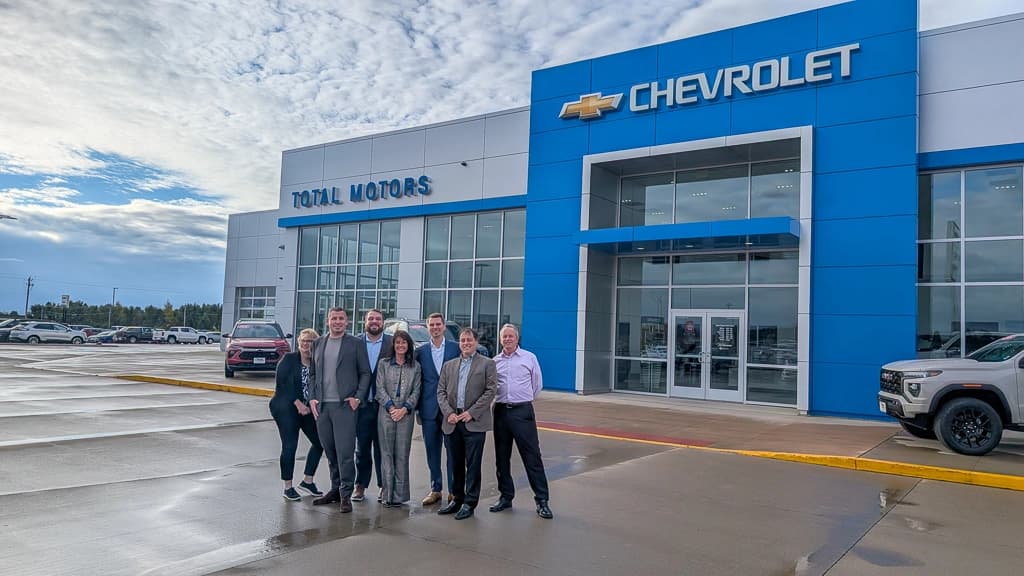
The Le Mars team. Photo: Sweet Dreams US LLC
Passive Income from Dealership Investment vs. Real Estate Syndication: A Comparison
How an 8% preferred return from auto retail compares to what syndicated real estate is delivering today.
For the past decade, real estate syndication has been the go-to vehicle for accredited investors seeking passive income from alternative investments. The structure is familiar: a sponsor identifies an asset, raises capital from limited partners, operates or improves the property, and distributes cash flow. Preferred returns of 7% to 10% were common during the low-rate era, and many sponsors delivered on those projections.
The landscape in 2026 looks markedly different. Rising interest rates have compressed refinancing opportunities that many syndication business plans depended upon. Several prominent multifamily sponsors have suspended distributions or entered capital calls. Delinquency rates in certain commercial real estate segments have climbed, and the gap between projected and actual returns has widened across the syndication market. Accredited investors who built allocation strategies around syndicated real estate are actively seeking alternatives that deliver income with better structural protection.
The Real Estate Syndication Challenge
The core challenge facing real estate syndications today is interest rate exposure. Many deals underwritten in 2020 through 2022 assumed refinancing at rates that no longer exist. Floating-rate bridge loans that were economical at 3.5% are punitive at 7%. Cap rate expansion means exit values are lower than projected, compressing sponsor returns and, in some cases, eliminating them entirely. The passive investor in these structures absorbs the downside with limited recourse.
Additionally, real estate syndications typically offer investors exposure to a single revenue stream: rent. When vacancy rises, when tenants default, or when operating expenses exceed projections, there is no secondary revenue engine to compensate. The income profile of a syndicated apartment complex is a single-variable equation: occupancy times rent, minus expenses.
How Dealership Co-Investment Compares
A franchise dealership co-investment through the Prime Dealer Equity Fund offers a structurally different income profile. The underlying asset generates revenue from four independent sources: new vehicle sales, used vehicle sales, finance and insurance products, and fixed operations. This diversification means the income stream supporting the investor’s preferred return is not dependent on a single revenue variable.
The fund’s 8% annual distribution target is paid from operational cash flow that is generated by a business with counter-cyclical characteristics. If new vehicle sales slow, service revenue tends to increase. If consumer financing tightens, used vehicle sales to cash buyers may strengthen. The four-legged revenue model creates multiple paths to generating the distributable cash flow that supports the preferred return.
Hard Asset Backing in Both Cases — But Not Equal
Both real estate syndications and dealership co-investments are backed by tangible real property. But the comparison is not symmetrical. A syndicated apartment complex is backed by real estate that requires a tenant base to generate value. A franchise dealership is backed by real estate and a business that holds a legally protected franchise territory, operates four profit centers, and generates recurring service revenue from a customer base that needs vehicle maintenance regardless of economic conditions.
For accredited investors seeking passive income from hard-asset-backed alternatives, the question is not whether dealership co-investment is better than real estate syndication in every scenario. It is whether the structural advantages — diversified revenue, counter-cyclical demand, franchise protections, and preferred equity positioning — make it a superior allocation in the current environment. The evidence increasingly suggests that they do.
Prime Dealer Equity Fund is a private equity vehicle co-investing with Coleman Automotive Group in the acquisition and optimization of automotive dealerships across the United States.
For qualified investor inquiries:
→ Contact our investor relations team