
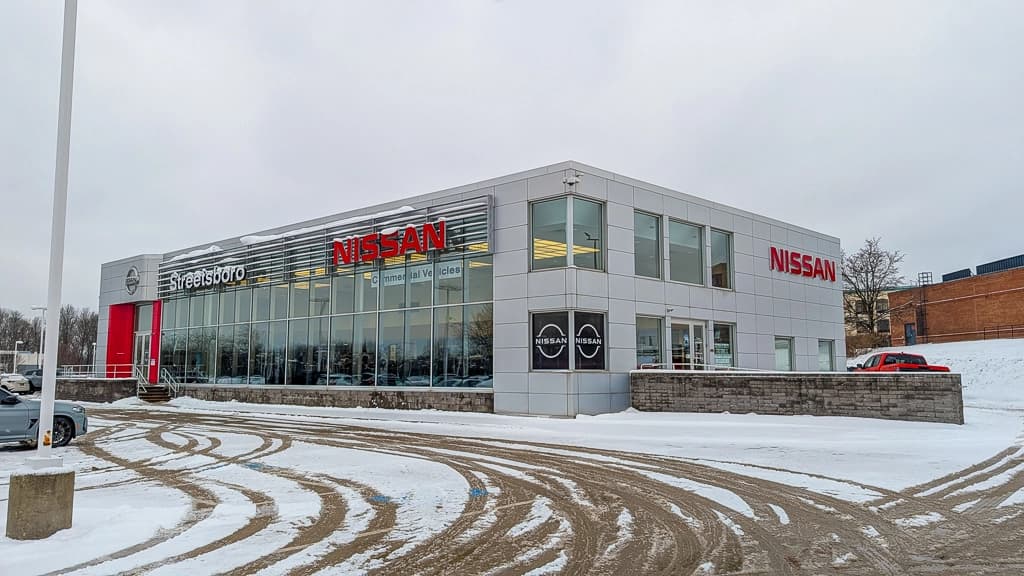
The service team at a Coleman Automotive location. Fixed operations is the countercyclical engine that institutional investors underestimate. Photo: Sweet Dreams US LLC
Recession-Proof Investment: How Service Departments Make Dealerships Countercyclical
The fixed operations department is the engine that keeps dealerships profitable when the rest of the economy stalls.
The word “recession-proof” has been overused to the point of meaninglessness. In most alternative investment marketing, it means “not as bad as equities during a downturn.” For franchised auto dealerships, it means something more specific and more powerful: the business contains a built-in revenue engine that activates precisely when the economy contracts.
That engine is fixed operations — the parts and service departments that generate revenue from vehicle maintenance, warranty work, collision repair, and parts sales. Understanding why this department makes dealerships genuinely countercyclical requires examining the economic mechanics that drive consumer behavior during a recession.
The Inverse Relationship Between Sales and Service
In a healthy economy, consumers replace their vehicles every three to five years. When a recession hits, that replacement cycle stretches to six, seven, or eight years. The average age of vehicles on American roads has already climbed past 12 years and continues to rise. Every year a consumer delays purchasing a new vehicle is a year that vehicle requires more maintenance, more repairs, and more parts. The dealership’s service drive gets busier precisely when the showroom slows down.
This is not a marginal effect. During the 2008–2009 recession, the National Automobile Dealers Association (NADA) reported that the average dealership’s service and parts gross profit increased even as new vehicle gross profit declined. Fixed operations revenue proved to be genuinely anticyclical — not merely resistant to the downturn but actively growing during it.
Fixed Absorption: The Metric That Defines Dealership Resilience
The industry measures a dealership’s recession resilience with a single metric: fixed absorption. This ratio calculates the percentage of the store’s total fixed overhead — rent, utilities, management salaries, insurance, and all other costs that exist regardless of vehicle sales volume — that is covered by gross profit from the parts and service departments alone.
A dealership with 100% fixed absorption means the service department, by itself, generates enough gross profit to pay every fixed cost the business has. New and used vehicle sales become pure profit contribution. A store at 80% fixed absorption needs only modest vehicle sales volume to break even. The national average hovers between 55% and 65%, but well-managed stores routinely exceed 80%, and the best operators push above 100%.
Coleman Automotive targets fixed absorption improvement as a core component of its 90-day turnaround methodology. When the team acquires a dealership that has been underperforming in service — which is common among family-owned stores where the founder focused on sales and treated service as a cost center — the upside is immediate and measurable. Restructuring service advisor compensation, implementing proactive customer outreach, extending service hours, and adding express maintenance capacity are all levers that lift fixed absorption within the first quarter of ownership.
Warranty Revenue: The OEM-Funded Safety Net
A portion of service department revenue comes from manufacturer-paid warranty work. This revenue stream is particularly valuable during economic stress because it is funded by the manufacturer, not the consumer. When a consumer brings in a vehicle for a warranty repair, the dealership bills the manufacturer at pre-negotiated labor rates and parts margins. The consumer pays nothing, which means warranty service demand is entirely insensitive to economic conditions.
For the franchise dealer, warranty work also serves as a customer retention tool. Every warranty visit brings the customer into the service drive, where the advisor can identify and recommend additional maintenance. Warranty visits convert to customer-pay revenue at measurable rates, extending the lifetime value of every vehicle the dealership sold or services.
What This Means for Investors
For accredited investors evaluating the Prime Dealer Equity Fund, the fixed operations story is the risk mitigation story. The fund’s preferred distribution is supported by a business that does not rely solely on consumer willingness to make large discretionary purchases. It is supported by the nondiscretionary reality that 290 million vehicles on American roads need oil changes, brake pads, tires, and transmission service regardless of what the S&P 500 does.
When investors ask whether a dealership investment can weather a recession, the answer is not a promise. It is a structural feature of the business model. The service department is not a backup plan. It is the plan.
Prime Dealer Equity Fund is a private equity vehicle co-investing with Coleman Automotive Group in the acquisition and optimization of automotive dealerships across the United States.
For qualified investor inquiries:
→ Contact our investor relations team