
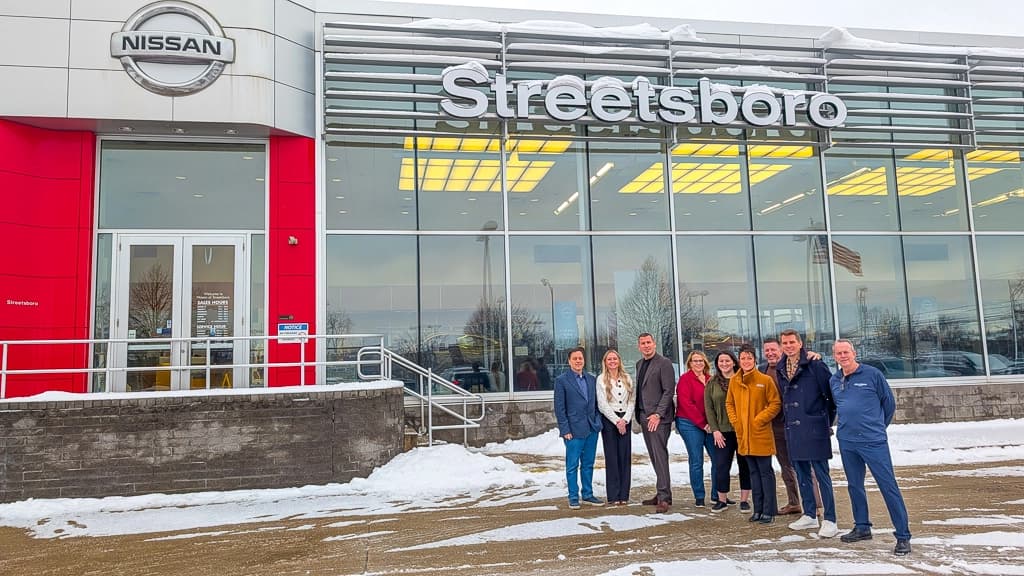
Streetsboro dealership, Streetsboro, Ohio. Photo: Sweet Dreams US LLC
Why Auto Dealerships Are the Most Recession-Resistant Investment You’ve Never Considered
Four revenue engines, counter-cyclical service demand, and a track record through two major recessions.
Recession resistance is the most overused and least substantiated claim in alternative investments. Every asset class claims to be defensive. Very few actually prove it when the economy contracts. Franchise car dealerships are one of the few that have done so — repeatedly, measurably, and through the two most severe economic disruptions of the modern era.
The structural reason is the four-legged stool: four distinct revenue engines operating under a single roof, with different economic sensitivities and counter-cyclical dynamics that prevent any single downturn from collapsing the entire operation. Understanding how each leg responds to economic stress is essential for any investor evaluating the recession resistance of a dealership co-investment.
How Each Revenue Leg Responds to a Downturn
New vehicle sales are the most cyclically sensitive leg. When interest rates rise, credit tightens, or consumer confidence falls, new vehicle volume declines. This is the leg that headlines focus on, and it is the reason most outsiders assume dealerships are highly cyclical businesses. But new vehicle sales are only one of four profit centers, and in many dealerships, they are not even the most profitable.
Used vehicle sales tend to strengthen during downturns as consumers who cannot afford new vehicles trade down to used alternatives. F&I products maintain relatively stable per-unit contribution because consumers who finance a vehicle purchase — whether new or used — are presented with the same suite of protection products regardless of the vehicle’s price point. And fixed operations — the parts, service, and collision departments — experience counter-cyclical demand as consumers extend the holding period of their existing vehicles, increasing maintenance and repair activity.
The 2008 Stress Test
During the 2008 financial crisis, new light-vehicle sales in the United States collapsed from 16.1 million units to 10.4 million — a 35% decline that would be fatal to any single-revenue retail business. Yet the average franchised dealership maintained a positive net pretax profit every single year of the crisis. Gross margins actually expanded as the revenue mix shifted toward higher-margin service and parts work. The stool did not tip because the service leg extended as the sales leg shortened.
The 2020 pandemic produced a different pattern but the same result. An initial demand shock was followed by an inventory shortage that compressed supply and expanded per-unit gross profits to historic levels. Dealerships that survived the initial two-month shutdown — and nearly all did, because their service departments were deemed essential businesses — went on to produce record profitability in 2021 and 2022.
What This Means for Investors in 2026
The current economic environment features elevated interest rates, persistent inflation in certain categories, and ongoing uncertainty about consumer spending durability. For investors allocating to alternatives, the question is not whether a recession will occur but whether the asset class they select can operate through one profitably.
Franchise dealerships have answered that question empirically. The four-legged stool is not a marketing concept. It is a structural feature of the business model that has been stress-tested through the two worst economic episodes of the 21st century and has delivered positive results in both. For accredited investors seeking recession-resistant alternatives backed by hard assets and diversified revenue, the evidence is not theoretical. It is historical, documented, and repeatable.
Prime Dealer Equity Fund is a private equity vehicle co-investing with Coleman Automotive Group in the acquisition and optimization of automotive dealerships across the United States.
For qualified investor inquiries:
→ Contact our investor relations team