
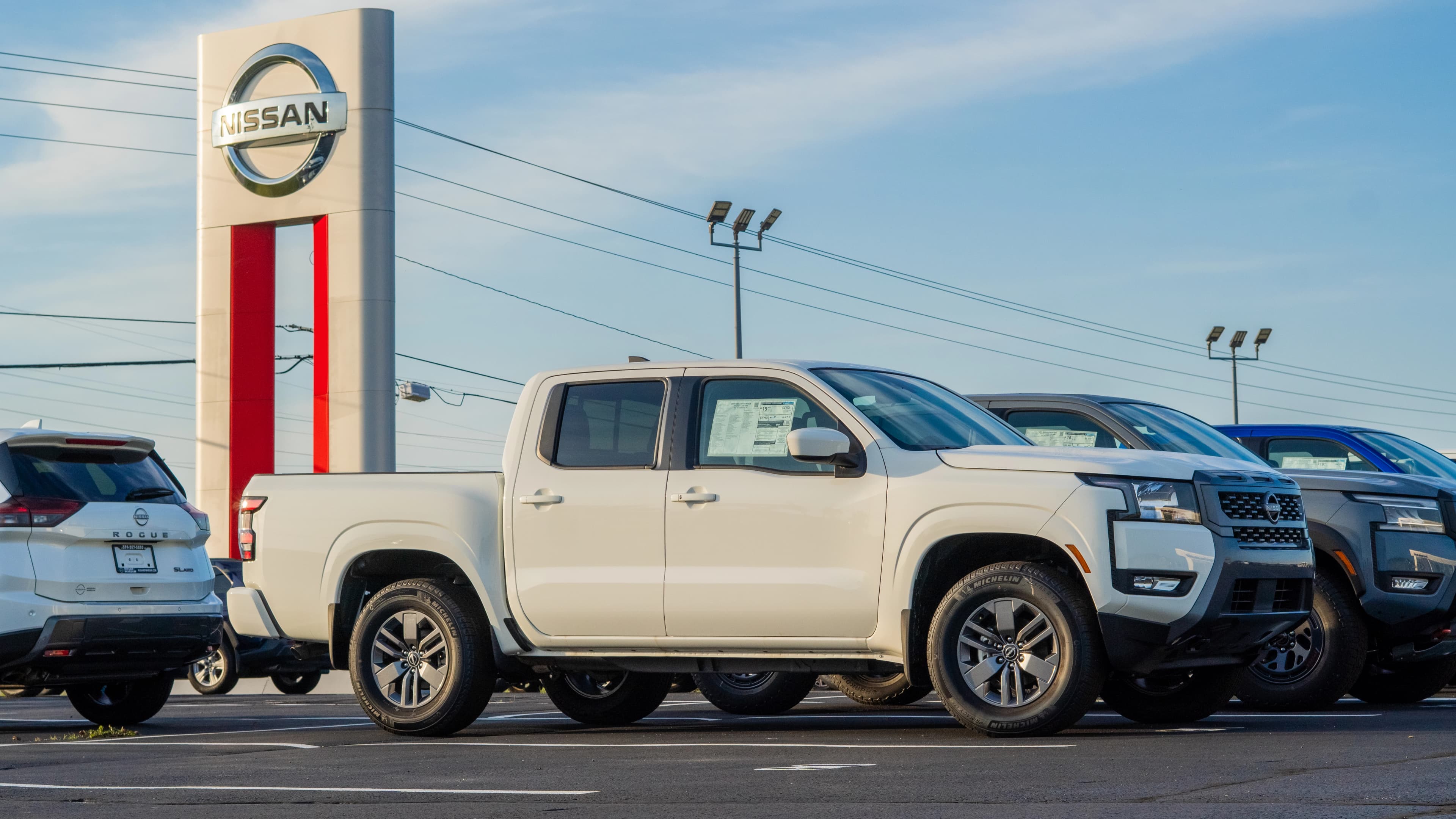
Nissan Warsaw, Warsaw, Indiana. Photo: Sweet Dreams US LLC
The Role of F&I Products in Dealership Profitability: A Hidden Profit Center
Finance and insurance products generate high-margin revenue with minimal incremental cost.
When investors think about how a car dealership makes money, they picture the sales floor — negotiation over price, trade-in haggling, the handshake that closes the deal. What most do not see is the small office at the back of the dealership where the real profit is made. The finance and insurance department, universally known as F&I, is the highest-margin profit center in the entire dealership operation, and it is the revenue line that separates merely profitable stores from exceptionally profitable ones.
What F&I Actually Does
The F&I department manages the financial transaction that follows every vehicle sale. This includes arranging retail financing through the dealership’s lending relationships, presenting extended service contracts and vehicle protection products, offering guaranteed asset protection (GAP) insurance, and packaging ancillary products like tire-and-wheel protection, paint sealant, and theft deterrent systems.
Each of these products generates gross profit for the dealership with virtually zero marginal cost. The dealership does not manufacture these products. It presents them to the customer during the transaction closing process and earns a commission or markup on each product sold. The F&I manager’s compensation is the primary expense, and a skilled F&I manager typically generates enough per-vehicle gross to cover their own salary many times over.
The Numbers Behind F&I Profitability
Industry benchmarks indicate that the average franchised dealership generates between $2,000 and $3,000 in gross profit per vehicle retailed through the F&I department. For context, the average front-end gross profit on a new vehicle sale — the margin on the vehicle itself — often falls in the $1,500 to $2,500 range. In many transactions, F&I profit exceeds the profit on the car itself.
This is why professional dealership operators obsess over F&I performance. A store that retails 100 vehicles per month and averages $2,500 per unit in F&I gross generates $250,000 in monthly high-margin revenue with minimal incremental overhead. Improving that average by just $300 per unit — through better product presentation, enhanced menu selling, and stronger lender relationships — adds $30,000 per month to the bottom line with almost no additional cost.
Why F&I Is an Operational Lever for Acquirers
Many family-owned dealerships that are coming to market through the generational transfer have underperforming F&I departments. The retiring owner may not have invested in modern menu-selling software, may not have trained the F&I manager in current presentation techniques, or may not have established competitive lender relationships that maximize approval rates and financing spreads.
For an institutional acquirer like Coleman Automotive Group, F&I improvement is one of the fastest and most predictable operational levers available post-acquisition. Installing a modern F&I process, recruiting a high-performing F&I manager, and establishing preferred lender relationships can increase per-vehicle gross by $500 to $1,000 within the first six months of ownership — a change that drops almost entirely to the bottom line.
For investors in the Prime Dealer Equity Fund, F&I performance is a critical component of the operational improvement thesis that underpins each acquisition. It is the profit center with the highest margin, the lowest incremental cost, and the most predictable improvement trajectory. Understanding it is not optional for any investor serious about evaluating a dealership co-investment.
Prime Dealer Equity Fund is a private equity vehicle co-investing with Coleman Automotive Group in the acquisition and optimization of automotive dealerships across the United States.
For qualified investor inquiries:
→ Contact our investor relations team