
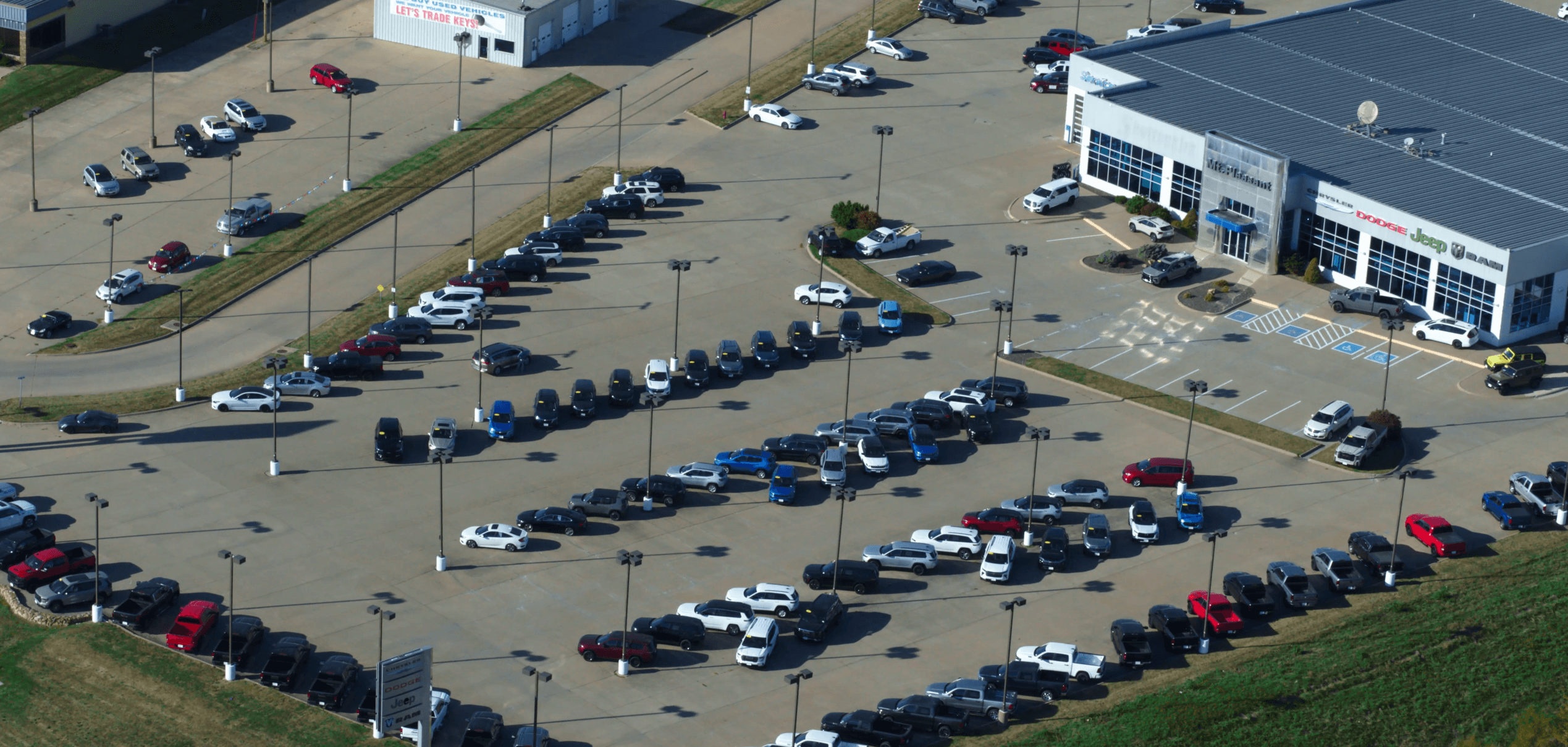
Mt. Pleasant Chevy GMC CDJR, Mt. Pleasant, Iowa. A fully operational franchise dealership campus. Photo: Sweet Dreams US LLC
Why Franchise Dealerships Outperform Traditional Alternative Investments in 2026
Hard assets, recurring revenue, and legal protections that no other alternative investment can match.
The alternative investment landscape has grown increasingly crowded over the past decade. Capital has flooded into multifamily, self-storage, and triple-net retail, compressing yields and intensifying competition for quality assets. Accredited investors who built wealth through these channels are now confronting a difficult reality: the most popular alternatives are no longer delivering the risk-adjusted returns they once did.
Meanwhile, a category of hard-asset-backed business has been quietly generating superior returns with structural protections that most investors have never considered. Franchise car dealerships — the backbone of automotive retail in America — represent an investment opportunity that combines real estate ownership, operational cash flow, recurring service revenue, and state-enforced territorial exclusivity into a single asset.
The Yield Compression Problem in Traditional Alternatives
Self-storage cap rates have climbed from roughly 5.0% in late 2022 to approximately 5.9% by mid-2024, reflecting both interest rate normalization and oversupply concerns. Prime multifamily assets trade in the 5% to 6% range, with some secondary markets pushing into the low 7s but carrying commensurately higher operational risk. Triple-net pharmacy — once the darling of passive investors — now trades at 6.7% to 7.5% cap rates, with credit risk ratcheting upward after the Rite Aid bankruptcy demonstrated that even the most established tenants are not immune to structural decline.
These are mature, heavily capitalized markets. The returns available today are a fraction of what early entrants earned a decade ago. For accredited investors seeking genuine alternative exposure — assets with structural moats, diversified revenue, and tangible downside protection — the answer lies in a category most have never underwritten.
What Makes a Franchise Dealership Structurally Different
A franchise car dealership is not a single-revenue business. It operates four distinct profit centers under one roof: new vehicle sales, used vehicle sales, finance and insurance products, and fixed operations — meaning the parts, service, and collision departments. Industry professionals refer to this as the “four-legged stool,” and it is the structural reason dealerships survive economic downturns that devastate single-revenue retail businesses.
When new vehicle margins compress during a recession, used vehicle sales and F&I products typically expand to compensate. When consumers stop purchasing vehicles entirely, the service department surges because people maintain the cars they already own rather than replacing them. This counter-cyclical dynamic — called “fixed absorption” when the service department alone covers the dealership’s entire fixed overhead — means a well-run dealership doesn’t merely survive downturns. It operates through them profitably.
The Legal Moat: State Franchise Protections
Every state in the country maintains franchise laws that protect dealerships from competitive encroachment and manufacturer overreach. These laws grant territorial exclusivity — preventing a manufacturer from placing a competing franchise within the dealer’s relevant market area, typically a 10-to-30-mile radius. The franchise agreement itself is essentially perpetual, with termination requiring “good cause” that is notoriously difficult for manufacturers to establish in court.
For the investor, this creates a legal moat that no other retail or real estate asset class can replicate. A self-storage facility faces unlimited competitive buildout. A pharmacy tenant can vacate when its lease expires. A franchise dealer holds a protected territory backed by state law and a franchise agreement that the manufacturer cannot unilaterally revoke. This structural protection is the reason dealership valuations have historically exhibited lower volatility than comparable commercial real estate.
The Co-Investment Opportunity
The Prime Dealer Equity Fund structures each co-investment in a dealership acquisition to capture both the real estate component — valued at traditional commercial cap rates between 6.0% and 7.5% — and the operational cash flow, which produces yields in the 12% to 15% range for well-managed stores. The blended return profile significantly exceeds what passive real estate alone can deliver.
For accredited investors who have grown frustrated with compressed yields, crowded deal flow, and rising credit risk in traditional alternative investments, franchise dealership co-investment offers a fundamentally different value proposition. The assets are tangible. The revenue is diversified. The legal protections are codified. And the consolidation window that is making these acquisitions possible will not remain open indefinitely.
Prime Dealer Equity Fund is a private equity vehicle co-investing with Coleman Automotive Group in the acquisition and optimization of automotive dealerships across the United States.
For qualified investor inquiries:
→ Contact our investor relations team