
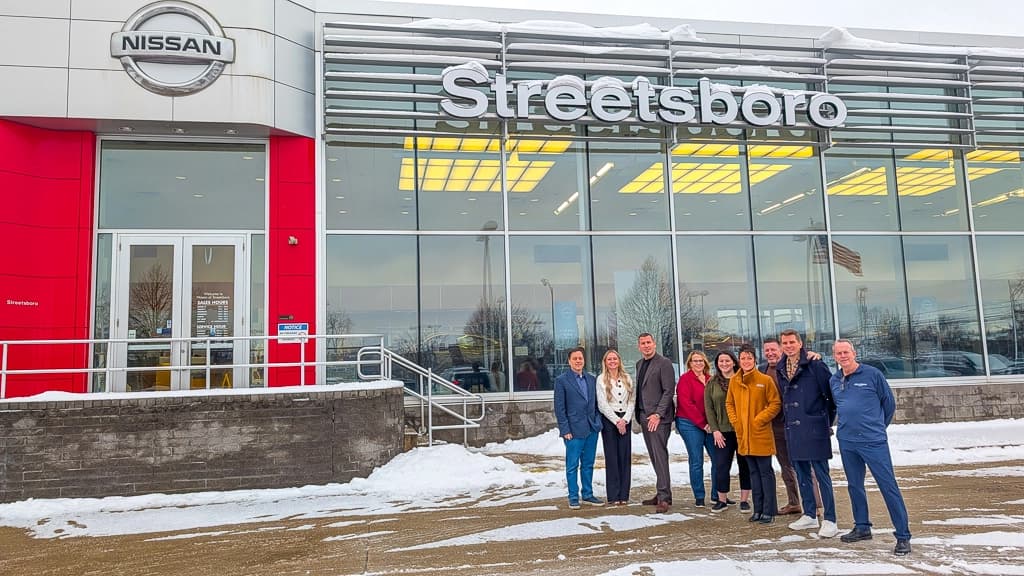
Every franchise dealership operates under a layered web of federal and state regulation. Photo: Sweet Dreams US LLC
Dealer Licensing and the Regulatory Maze: FTC Safeguards, ECOA, and Lemon Laws
Franchise dealerships operate under more federal and state regulation than almost any other retail business — covering data security, lending fairness, advertising, vehicle warranties, and consumer protection. Operating well at scale means treating compliance as a real operating discipline.
Few retail businesses in the United States operate under a regulatory framework as dense as the one that governs a franchised automobile dealership. A single store is simultaneously a state-licensed motor vehicle retailer, a federally regulated financial institution under the Gramm-Leach-Bliley Act, an advertiser regulated by the Federal Trade Commission, a lender supervised in practice by the Consumer Financial Protection Bureau, an employer subject to OSHA, and an environmental generator regulated by the EPA and its state counterparts. None of those regulators talk to each other. All of them write rules that the store must follow.
For an institutional investor, that density is not a curiosity — it is a diligence and integration problem. Every dealership we evaluate carries some amount of latent compliance liability that does not appear on the trailing P&L. A non-compliant Safeguards program, an undisclosed advertising violation, a sloppy fair-lending file, an environmental issue at the back of the service drive — any of these can surface as a fine, a settlement, or a remediation cost in the first eighteen months of ownership. Disciplined operators price these risks into the deal and remediate them on a fixed timeline after closing.
This chapter walks through the consumer-facing and operational regulatory framework dealers operate under. It is deliberately not the place where we cover state franchise law — that legal moat protecting dealers from manufacturer overreach is the subject of its own chapter. The framework discussed here is the everyday compliance surface area that determines whether a store earns its margin cleanly or earns it at risk.
The Layered Regulatory Stack
The right way to understand dealership compliance is to picture three concentric rings. The outer ring is federal — the FTC, the CFPB by influence, the EPA, OSHA, and a handful of statutes (TILA, ECOA, GLBA, FCRA) that apply to every dealer in every state. The middle ring is state — dealer licensing, state lemon laws, state advertising regulations, state environmental enforcement, and state attorney general consumer-protection authority. The inner ring is local — county and municipal zoning, signage, stormwater, fire suppression, and use permits.
Most enforcement risk lives at the seams between rings. A federal rule sets a floor; a state regulator interprets it more aggressively; a local inspector applies it differently from one jurisdiction to the next. A dealer group operating in five states is, in practice, navigating five different versions of the same rule on top of the federal baseline. That is why scale demands a centralized compliance function rather than store-by-store improvisation.
The economic consequence is that compliance has a fixed-cost component that small operators cannot efficiently absorb. A single store cannot justify a full-time compliance officer, a dedicated environmental specialist, or a recurring outside audit cadence. A platform of fifteen stores can — and that is one of the quieter sources of operating leverage in the consolidator model.
Dealer Licensing — The State-Level Foundation
Every franchise dealer in the country holds a state-issued motor vehicle dealer license. The application is consistent in shape across jurisdictions even if the details vary: a surety bond (typically $25,000 to $50,000 depending on the state), a background check on the controlling principals, a facility inspection confirming a real place of business with required signage and office space, proof of an executed franchise agreement with the manufacturer, and audited or reviewed financial statements demonstrating capitalization. Licenses must be renewed annually, and any change of ownership, location, or controlling officer requires notice and re-approval.
Several states layer on additional structure. Texas operates through the Texas Department of Motor Vehicles with one of the most prescriptive licensing regimes in the country. California requires a separate Occupational License through the DMV's Investigations Division for every salesperson, manager, and finance manager — not just the entity. Florida administers dealer licensing through the Department of Highway Safety and Motor Vehicles with its own bond and continuing-education requirements. An acquirer entering a new state needs to budget time for the licensing transition, because in most jurisdictions the buyer cannot legally retail vehicles under the new ownership until the new license is issued.
From a deal-execution standpoint, this is one of the most underestimated items in the closing checklist. Licensing transitions can take 30 to 90 days depending on the state, and the franchise agreement assignment from the manufacturer is often timed to the licensing approval. Sophisticated operators run licensing and franchise approval as parallel workstreams from the moment a deal is signed.
The FTC Framework: Safeguards, CARS, and Beyond
The Federal Trade Commission is the single most consequential federal regulator in the dealer's day-to-day life. Two rules in particular drive operating behavior. The first is the Safeguards Rule, promulgated under the Gramm-Leach-Bliley Act. Because dealers extend credit and arrange financing, they are treated as financial institutions and must maintain a written, comprehensive information security program. The program must include access controls, encryption of customer data in transit and at rest, multi-factor authentication for systems touching customer information, vendor security assessments, an incident response plan, and a designated Qualified Individual with explicit authority to manage the program. Penalties for material non-compliance can run into the millions per enforcement action.
The second is the FTC's Combating Auto Retail Scams Rule — the CARS Rule — which governs how dealers advertise and sell add-on products. The rule requires clear disclosure of the offering price, prohibits advertising a monthly payment without disclosing the full terms that produce it, and requires that any add-on product (service contracts, GAP, prepaid maintenance, theft deterrent) be presented with its price and a clear statement that it is optional. The CARS Rule has gone through litigation and rule-making rounds since promulgation, but the operating principle has been internalized by responsible operators: every advertised number is supportable, and every add-on is sold with documented consent.
Cybersecurity sits adjacent to the Safeguards Rule and is its own discipline at scale — we cover the operational side of cyber in a later chapter. For purposes of this chapter, the relevant point is that the Safeguards Rule converts a dealer's IT infrastructure into a regulated environment. The Qualified Individual is a real role with real liability, and the program must be tested and updated on a documented cadence.
Fair Lending and the Truth in Lending Act
Roughly 80 percent of new vehicles are financed at the point of sale, which makes the dealership's finance office the most regulated room in the building. Two federal statutes anchor the framework. The Equal Credit Opportunity Act prohibits discrimination in any aspect of a credit transaction on the basis of race, color, religion, national origin, sex, marital status, age, or receipt of public assistance. The Truth in Lending Act requires defined disclosures on every retail installment contract — APR, finance charges, total of payments, and the payment schedule — in a uniform format the consumer can compare across lenders.
ECOA's practical edge for dealers comes through dealer markup. When a captive or indirect lender approves a customer at a buy rate, the dealer is generally permitted to mark up the rate within a defined cap. The CFPB has scrutinized that practice intensely, on the theory that even facially neutral markup discretion can produce disparate impact across protected classes. Most well-run dealer groups now operate under written rate-markup policies — typically a fixed cap and a documented exception process — so that any pattern in the data has a defensible operational explanation.
The Red Flags Rule sits alongside ECOA and TILA and requires every dealer that extends credit to maintain a written identity-theft prevention program. In practice this means verifying the identity of every credit applicant against documentary evidence and credit bureau data, escalating mismatches to a manager, and documenting the resolution. The program is not difficult to operate; it is difficult to operate consistently across hundreds of deals a month, which is why it is one of the first items a sophisticated buyer audits in diligence.
Lemon Laws and Consumer Protection
Every state has a lemon law, and they are not uniform. Most statutes apply to new vehicles that exhibit a defect substantially impairing use, value, or safety, and that the manufacturer or its authorized dealer has been unable to repair after a defined number of attempts — typically three to four for the same defect, or a cumulative number of days out of service over the warranty period. The remedy is generally a replacement vehicle or a refund, less a statutory deduction for use.
The dealer's role in lemon-law cases is operational rather than financial — the obligation to repurchase typically sits with the manufacturer — but the dealer is the customer-facing party and the documentary record. Repair orders must be precise, customer complaints must be transcribed accurately, and the technician's findings must be documented every visit. A weak service file is what turns a manageable warranty case into a litigated lemon-law claim, and it is the dealer's recordkeeping that determines which side of that line a given matter falls on.
State attorneys general also retain broad consumer-protection authority that runs parallel to the FTC framework. Multi-state actions involving advertising practices, add-on product disclosures, and finance-and-insurance compliance have become more common over the past decade. The defensive posture is the same one that protects against private litigation: clean disclosures, documented consent, and a service file that reflects what actually happened.
Environmental, OSHA, and the Operational Side
The back half of the dealership — service, body, and parts — operates under an entirely separate regulatory framework. EPA rules govern waste oil, used antifreeze, refrigerants, paint booth emissions, and stormwater runoff from the lot. Refrigerant handling under Section 608 of the Clean Air Act requires technician certification and recordkeeping. Body shops operating spray booths must manage VOC emissions and maintain documented compliance with state air quality permits. Most dealerships also operate underground storage tanks for fuel — used in service loaners and the sublet fueling operation — which carry their own federal and state UST regulations, including release detection, financial responsibility, and closure obligations.
OSHA governs the workplace itself. Lifts must be inspected, chemical handling must comply with the Hazard Communication Standard, fire suppression must be tested on cadence, and electrical work in the shop must meet code. None of these requirements is exotic, and none is expensive in steady state. What is expensive is inheriting a store with years of deferred compliance — uninspected lifts, expired SDS binders, undocumented chemical disposal — and discovering it after closing.
Environmental and OSHA diligence is therefore a real line item in our pre-closing process. We conduct a Phase I environmental site assessment on every acquisition, walk the shop with an OSHA-credentialed reviewer, and price any remediation explicitly into the bid. The cost of doing this work cleanly is a fraction of the cost of inheriting a problem and discovering it from a regulator's letter twelve months in.
By the Numbers
The Compliance Stack
State Dealer License — annual renewal, surety bond, facility inspection, principal background check
FTC Safeguards Rule — written information security program, encryption, MFA, designated Qualified Individual
FTC CARS Rule — advertised pricing, monthly-payment disclosures, optional add-on consent
ECOA and TILA — fair-lending compliance, rate-markup policy, defined credit disclosures on every contract
Red Flags Rule — written identity-theft prevention program with verification on every credit applicant
State Lemon Laws — repair documentation, manufacturer notification, replacement-or-refund process
EPA, UST, and OSHA — waste handling, refrigerant certification, tank monitoring, shop safety standards
Compliance as a Value Driver in Diligence
The investor takeaway is that compliance is not a defensive expense — it is a real source of value when done well, and a real source of hidden liability when done poorly. A target dealership's trailing P&L will reflect the staffing and tooling cost of the program it actually runs. What the P&L will not reflect is the unaccrued cost of the program it should have been running: the missing Qualified Individual, the unwritten rate-markup policy, the unfiled UST inspections, the casual approach to add-on disclosures. Those gaps surface, on average, in the first twelve to eighteen months of new ownership, and they surface as fines, settlements, or remediation work that the seller did not pay for.
Disciplined acquirers run a compliance audit alongside the financial and operational diligence. We benchmark the target's Safeguards program against current FTC guidance, sample finance files for ECOA and TILA compliance, walk the service and body shop with an environmental and OSHA lens, and review the prior twelve months of customer complaints filed with state regulators and the BBB. The output is not a pass-fail grade; it is a remediation budget and a 90-day post-close action plan that gets priced into the deal model.
Strong operators run compliance as a P&L item the same way they run inventory or fixed operations: with a designated Compliance Officer at the platform level, a defined annual audit cadence, continuous staff training, and complete documentation of every process. The all-in cost of that program at platform scale is meaningful but small relative to the cost of a single major enforcement action — and the operating discipline it produces shows up in cleaner files, smoother manufacturer audits, and lower realized cost of capital from lenders that price counterparty risk into floor plan and mortgage facilities.
Prime Insight
Coleman Prime treats compliance as a value driver from the first day of integration, not a back-office expense.
Every acquired store is brought onto a standardized Safeguards program, fair-lending policy, and environmental-and-OSHA cadence within the first 90 days.
A dedicated platform-level Compliance Officer owns the program across the group, supported by annual third-party audits at every dealership.
The result is lower latent legal exposure, cleaner lender and manufacturer audits, and a measurable reduction in the cost of capital — all of which compound across the platform.
Prime Dealer Equity Fund is a private equity vehicle co-investing with Coleman Automotive Group in the acquisition and optimization of automotive dealerships across the United States.
For qualified investor inquiries:
→ Contact our investor relations team