

The Coleman Automotive team on-site during a dealership transition. The first 90 days are about replacing assumptions with verified data. Photo: Sweet Dreams US LLC
What Happens in the First 90 Days After We Acquire a Dealership
The clock starts the moment the dealership keys change hands. Here is exactly how we turn an underperforming store into a cash-flowing asset.
Every dealership acquisition looks the same from the outside. New name on the sign. Maybe a ribbon cutting. A press release about exciting new controlling ownership.
From the inside, it looks nothing like that. The moment the dealership keys change hands, the real work begins — and the first 90 days determine whether the capital deployed into that dealership (as an asset) will generate returns or sit idle while legacy problems compound.
The Coleman Automotive Group operates a five-phase turnaround process that begins the day an acquisition closes and concludes with a dealership that runs autonomously, profitably, and on verified data rather than inherited assumptions. This is not a theory. It is the operational playbook that has transformed underperforming stores from sub-200 units a year to over 750 under Coleman ownership, and it is the same process applied to every subsequent acquisition in the group’s portfolio.
This post walks through exactly what happens in those 90 days — phase by phase — and why the speed and discipline of this process is what protects investor capital from the moment it is deployed.
Phase I: Know Exactly What You Bought (Days 1–15)
The due diligence that happens before closing tells you what a dealership looks like from the outside. The first two weeks of ownership tell you what it actually is.
Nearly 40% of small business acquisitions reveal meaningful financial record inconsistencies once the new owner gets inside the books. In a dealership, this manifests in specific, predictable ways: the inventory in the Dealer Management System does not match the vehicles physically on the lot. Parts shelves hold obsolete stock that has been carried as an asset for years. Open repair orders in the service department have been sitting incomplete, masking revenue leakage. Floor plan records show vehicles that are in transit, at a body shop, or simply unaccounted for.
The Coleman team deploys on-site the day the deal closes. The first action is a full physical inventory reconciliation — every new vehicle, every used vehicle, every unit in the service bay or off-site is verified by VIN against the DMS records. The parts department gets a cyclic count to identify dead stock and capital trapped in non-moving SKUs. Open repair orders are audited for work-in-process cycle time to find where the service department is bleeding hours.
Simultaneously, the financial baseline is established. Accounts payable are reconciled. Sales and use tax remittance is verified. The internal control environment — who can approve deals, who can write checks, who has access to what — is mapped and, where necessary, locked down. The month-end closing process, which under legacy ownership might have taken weeks, is standardized to close in days. This is not about distrust. It is about building the single source of truth that every decision for the next 75 days will be based on.
The DMS itself gets a data hygiene pass. Legacy CRM databases in dealerships frequently carry duplicate customer profiles — sometimes accounting for 10% or more of the total records. These duplicates corrupt marketing automation, distort lead attribution, and make it impossible to track a customer’s lifecycle from first inquiry through years of service visits. Cleaning the data on day one means every system that touches the customer — sales, service, F&I, marketing — is working from the same verified foundation.
From the Floor
“Day one is not about making changes. Day one is about finding out what’s real. You can’t fix what you haven’t verified. Every decision we make in the first 90 days is built on what the audit tells us — not what the seller’s P&L said.”
— Kyle Coleman, CEO
→ Meet the Coleman Automotive leadership teamBy the end of week two, the team knows exactly what they own: how many vehicles are real and liquid, how much capital is trapped in dead inventory, where the service department is underperforming, and whether the financial records match operational reality. Everything that follows is built on this foundation.
Phase II: Cut What Doesn’t Prove ROI (Days 15–45)
Dealerships accumulate vendors the way old houses accumulate junk drawers. Over years of operation, contracts stack up — lead providers, CRM platforms, digital marketing agencies, inventory photography services, reputation management tools, scheduling software — and no one ever audits whether they are still delivering value.
In many legacy dealerships, multiple lead aggregators are running simultaneously with no clear attribution model. The store is paying for three tools that do overlapping jobs because the previous owner signed a contract years ago and it auto-renewed. A single legacy DMS platform might be costing $120,000 a year for features the store has never used. The bloat is real, and it erodes margin invisibly because it is buried in line items that no one questions.
The Coleman team audits every vendor contract in the first 45 days. The question for each one is simple: can you prove, with data, that this expenditure generates a return? If the answer is yes, the relationship continues — often renegotiated to month-to-month terms that force the vendor to keep earning the business. If the answer is no, or if the vendor cannot provide transparent performance metrics, the contract is terminated.
This is not about cutting costs for the sake of cutting costs. It is about redirecting capital from administrative overhead into high-impact areas — better technician pay, modern diagnostic equipment, targeted local marketing — that directly drive revenue. The savings are often substantial. Consolidating digital marketing under a single omnichannel strategy, aggregating parts and shop supply purchasing across the group, and eliminating redundant SaaS subscriptions can recover tens of thousands of dollars per quarter that flow straight to the bottom line.
The reconditioning pipeline gets the same treatment. In many acquisitions, used vehicle reconditioning is a bottleneck — cars sit for days waiting for parts, body work, or detailing before they can be listed for sale. Every day a vehicle sits in reconditioning is a day it is not on the lot generating revenue while accumulating floor plan interest. The turnaround team standardizes the reconditioning workflow, tracks cycle time by vehicle, and sets a target to get units frontline-ready in the shortest window possible. The goal is an inventory turn rate of eight to twelve times per year — the benchmark for a high-performing used car operation.
By the Numbers
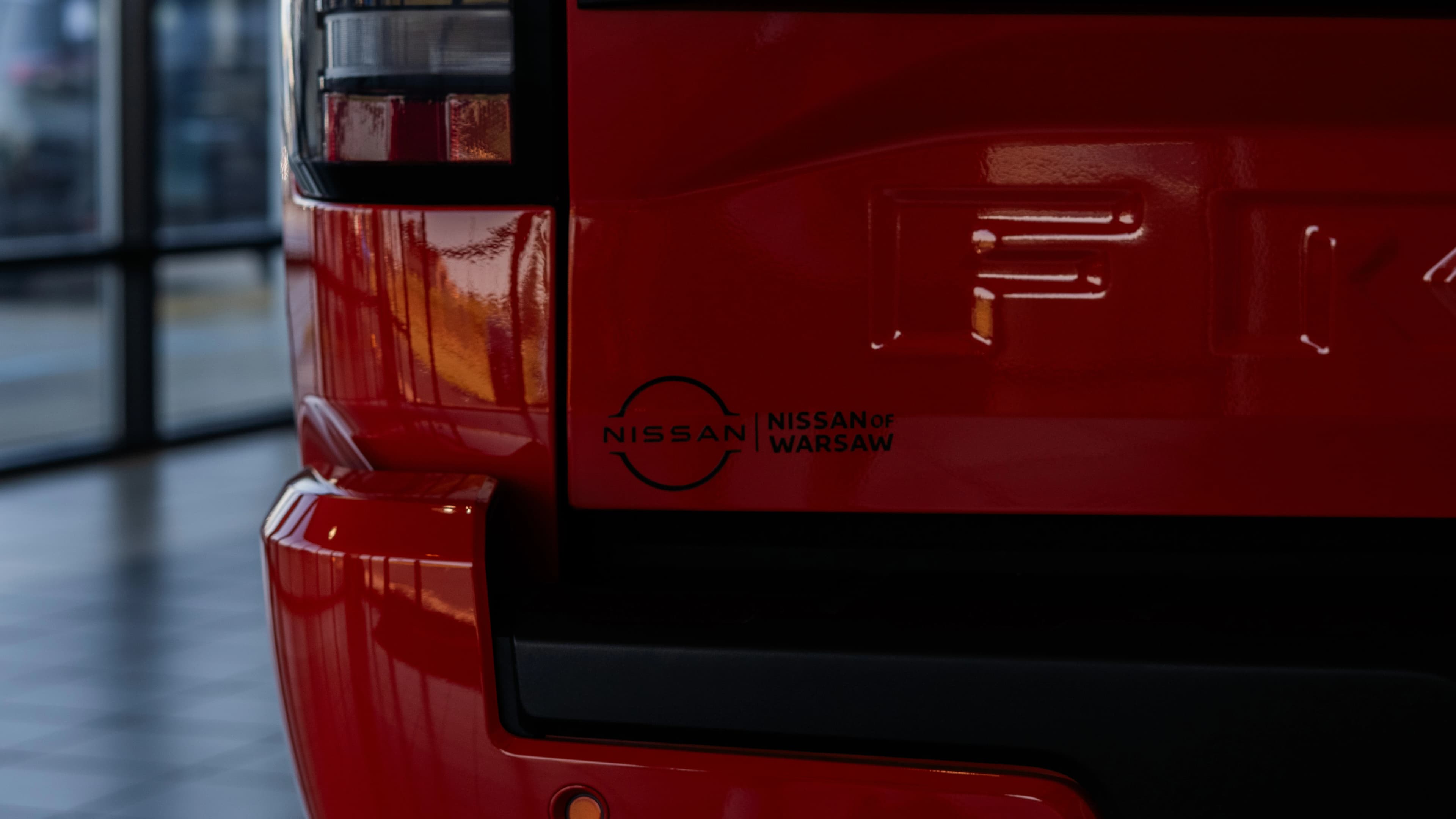
Nissan of Warsaw — 4 Months Under Coleman Ownership
Previous monthly volume: 30–40 vehicles
Current monthly average: 77 vehicles
Growth: Doubled in under 120 days.
Phase III: Get the Right People in the Right Seats (Days 30–60)
The vendor audit recovers margin. The talent phase is what creates revenue.
This is where the Coleman philosophy diverges most sharply from conventional dealership turnaround thinking. The standard playbook says: stabilize the store first, then hire better people once the revenue justifies the salary. Coleman inverts this entirely. The belief — validated repeatedly across every acquisition in the group — is that elite talent is the catalyst for revenue, not the reward for it.
This is what Kyle Coleman calls the "chicken or the egg" of executive hiring. Do you wait for the store to be profitable enough to afford a top-tier CFO, a 20-year Director of Fixed Operations, a finance director who has run F&I at a Tier 1 group? Or do you hire them first and let their expertise be the thing that makes the store profitable?
Coleman hires first. The group has recruited executives who relocated their families across the country — from the West Coast to rural Iowa — because they believed in the operational vision and the compensation structure. These are not placeholders. They are the people who lose sleep over the numbers, who identify the specific levers that move a store from 35% market efficiency to full potential, and whose presence signals to every other employee in the building that the standard just changed.
At the individual contributor level, the turnaround team conducts one-on-one evaluations of every existing employee — what the team calls a "Know Your Players" assessment. The goal is to understand who the real performers are, who needs coaching, and who is in the wrong role. Top performers are identified and rewarded immediately. Underperformers are given clear expectations and a timeline. The organization does not carry passengers, but it also does not discard people who have been underserved by poor management. Some of the best turnaround results come from employees who were always capable but never had the leadership or the systems to perform.
The accountability framework is anchored in KPIs that are visible, shared, and tied directly to compensation. Sales consultants are measured on closing ratio, gross per unit, and F&I penetration. Service advisors are tracked on hours per repair order, first-time fix rate, and appointment show rate. The General Manager’s bonus is structured as a percentage of the dealership’s net profit — typically 10% to 15% — which ensures that the person running the store is financially aligned with ownership on every decision.
This is not micromanagement. Once the KPIs are set and the right people are in place, the system is designed to run with minimal intervention. The leadership "box" that Coleman talks about — non-negotiable core values and minimum performance standards — gives managers the autonomy to run their stores locally while ensuring that the financial outcomes meet the group’s requirements.
Phase IV: Turn the Lights On (Days 45–75)
The first three phases are internal. Phase IV is where the market finds out the store is under new management.
Market activation starts with the digital footprint. The dealership’s Google Business Profile is audited and optimized — accurate name, address, phone number, hours, services, and high-quality photography from the Sweet Dreams media team. The review profile is assessed and a strategy is implemented to generate authentic positive reviews organically, because in local search, the dealership that owns the Google Map Pack owns the first impression.
The website gets a conversion rate overhaul. Every page that a potential customer lands on — whether they are searching for a new vehicle, a service appointment, or a trade-in value — needs a clear, immediate path to action. Sticky calls-to-action for test drives, trade appraisals, and service scheduling are implemented across the site. The goal is to convert digital browsing into physical appointments.

Then the targeted campaigns launch. But here is what makes the Coleman approach different from a generic digital marketing rollout: the marketing is built on the verified data from Phase I and the cleaned CRM from the systems integration. The team knows exactly who the dealership’s existing customers are, when they last visited, what they drive, and when they are likely due for service or a vehicle replacement. Instead of blasting generic ads into the market, the campaigns are built on actual customer intelligence.
In rural and exurban markets — which is where many of Coleman’s acquisitions are located — the team also deploys analog channels that most modern marketers have abandoned. Direct mail, specifically handwritten-style letters, generates conversion rates in these markets that digital cannot match. The reason is simple: in communities that are not saturated with programmatic advertising, a physical piece of mail commands a share of attention that a Facebook ad never will. Coleman has documented instances where customers call the dealership specifically to thank them for the letter — a phenomenon that does not happen in metro markets and is virtually impossible to replicate digitally.
The service drive is also activated as a vehicle acquisition channel. Customers who bring their cars in for maintenance are sitting in a position where they are already thinking about the cost of maintaining their current vehicle versus upgrading. The turnaround team integrates instant cash offer tools into the service check-in process, allowing advisors to present data-backed trade-in offers to customers whose vehicles fit the store’s used inventory profile. This sources local, lower-cost inventory without competing at auction, improves margins, and deepens the customer relationship simultaneously.
Prime Insight
The 90-day turnaround is the mechanism that protects investor capital. Every dollar deployed by Prime Dealer Equity Fund is subjected to this operational process — verified assets on day one, optimized cost structures by day 45, revenue acceleration by day 75, and autonomous operations by day 90.
The Fund’s targeted minimum of 8% annual distribution is grounded in revenue expectations based on operational discipline and a repeatable turnaround methodology — though actual results may vary based on dealership performance and market conditions.
Phase V: Let It Run (Days 75–90)
The final phase is the one most acquirers get wrong. They do the turnaround work but never build the system that sustains it without their constant presence. The result is a store that performs well when the owner is watching and drifts when they are not.
The Coleman model is designed for autonomous delegation from day one. The entire point of the first four phases — verified data, lean vendor structure, elite talent, activated market — is to create a store that operates on a system, not on a personality.
The operational backbone of this system is the Daily Operating Control report. Unlike legacy monthly financials that arrive weeks after the period closes, the DOC gives the General Manager a real-time view of cash flow, transaction volume, department-level gross profit, and expense tracking every single day. Anomalies — a spike in overtime, a dip in F&I gross, a service department falling below its hours-per-RO target — are visible immediately, not buried in a report that arrives three weeks too late to act on.
Standard Operating Procedures are formalized for every department. These are not binders that sit on a shelf. They are the documented, repeatable processes that ensure a new hire in the service department follows the same workflow as the ten-year veteran, that every deal in the finance office follows the same compliance protocol, and that every customer interaction meets the same standard regardless of who is on the floor that day.
For a multi-store group, centralization amplifies this effect. Back-office functions — accounting, payroll, HR, compliance, IT — are consolidated at the group level so that individual stores are not duplicating administrative overhead. A centralized Business Development Center can manage inbound leads and service appointments for multiple locations, ensuring that no call goes unanswered and that the service advisors on the floor are focused on the customers standing in front of them, not the phone ringing.
The endgame of Phase V is a store where the ownership group can shift its focus to the next acquisition with confidence that the current asset is delivering consistent, predictable results. The General Manager operates within the "box" — the core values and minimum performance standards — with full autonomy to make local decisions. The KPIs are visible. The DOC is running. The talent is aligned. The system is the core of the management.
This is what allows the Coleman Automotive Group to scale. Each turnaround does not just fix a single store — it proves the repeatability of the process and creates the retained earnings that fund the next acquisition in the pipeline. The 90-day playbook is not a one-time project. It is the engine that drives the entire growth strategy at each acquired dealership.
Why 90 Days Matters for Investors
The speed of this process is not arbitrary. It is a direct function of the Fund’s investment strategy.
Prime Dealer Equity Fund targets a minimum of 8% annual distribution with priority capital return projected within five years. That timeline only works if the capital deployed into each dealership acquisition begins generating cash flow quickly — not in a year, not after a prolonged stabilization period, but within the first quarter of dealership control. The 90-day turnaround is what makes that math work. It compresses the time between capital deployment and cash flow generation, which is the single most important variable in the Fund’s investment strategy for returns on investment.
Every phase is designed to enable the Fund’s investment strategy with respect to the investor’s capital. The forensic audit verifies that the assets are real. The vendor pruning eliminates margin leakage. The talent injection creates the revenue catalyst. The market activation turns the store’s potential into actual transactions. And the autonomous system ensures that the returns are sustainable, not dependent on the constant presence of the turnaround team.
The 90-day playbook is how Coleman Automotive turns an acquired dealership into a revenue producing asset. It is how Prime Dealer Equity Fund plans to turn investor capital into cash flow. And it is why the operational discipline behind the Manager’s of the Fund is not a talking point — it is part of the Fund’s investment strategy.
Prime Dealer Equity Fund is a private equity vehicle co-investing with Coleman Automotive Group in the acquisition and optimization of automotive dealerships across the United States.
For qualified investor inquiries:
→ Contact our investor relations team