
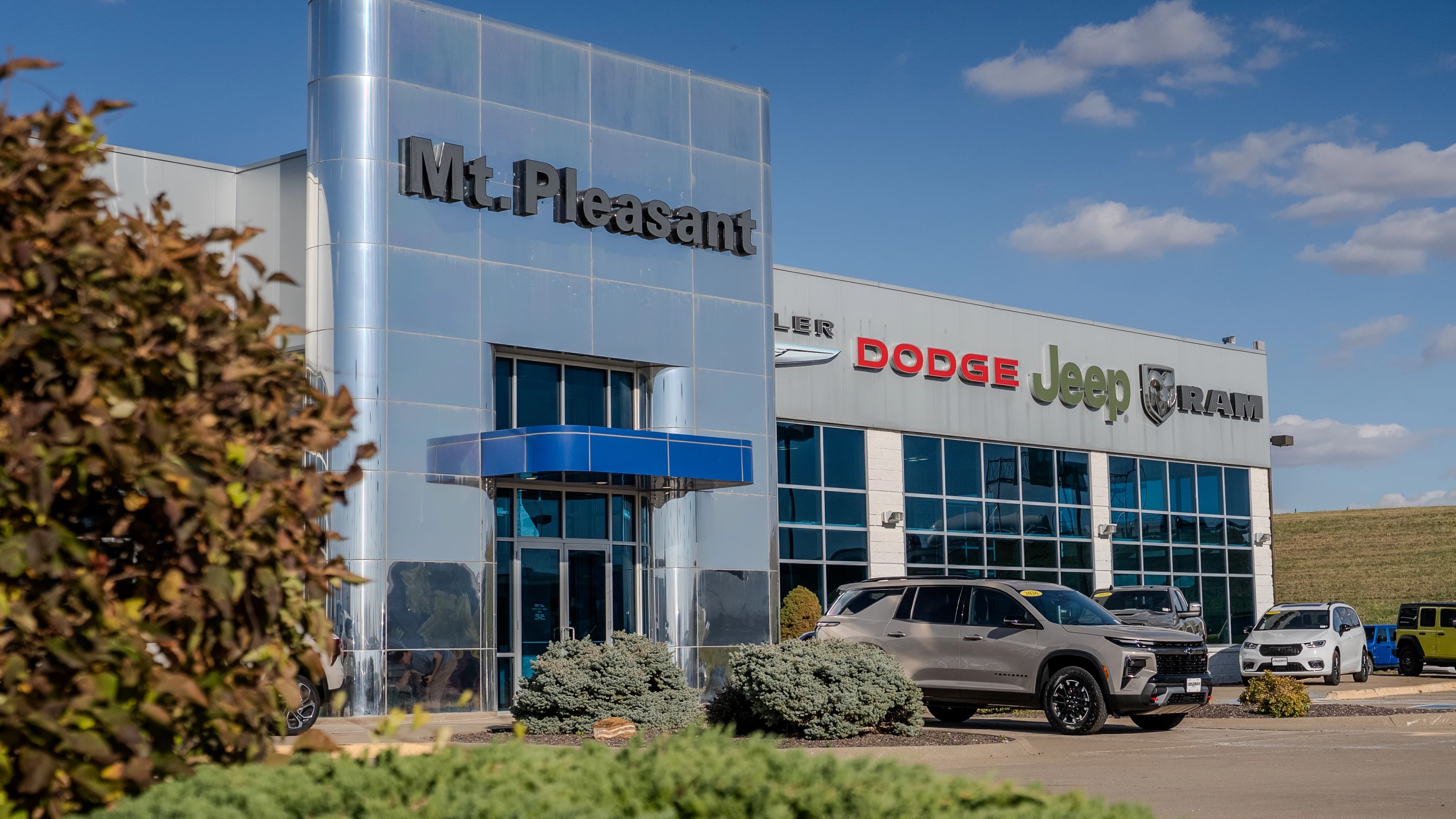
A Coleman Automotive acquisition site. Many of the dealerships entering the buy-sell market today were founded decades ago by families who built them from the ground up. Photo: Sweet Dreams US LLC
The Generational Transfer Crisis: 18,000 Dealerships and No One to Run Them
The largest ownership turnover in automotive retail history is happening right now. Most investors don’t even know it exists.
There are approximately 18,000 franchised new-car dealerships operating in the United States right now. The vast majority of them are still owned by families — many by the same families who opened them thirty, forty, or fifty years ago. The owners who built these businesses are now in their seventies and eighties. Their children, in growing numbers, do not want to own or operate them.
This is not a soft trend. The number of dealer principals actively planning to sell has increased 258% since 2022. The buy-sell market set a new transaction record in 2024 with 438 completed deals. And the total number of individual dealership owners in the country — once 40,000 in the 1930s — has collapsed to roughly 8,000 today, with projections suggesting a further decline to 6,000 within two decades.
What is happening is not a correction. It is a structural reconfiguration of who owns automotive retail in America. And for investors who understand the mechanics, it is the single largest window of opportunity the asset class has ever produced.
This post is a direct extension of why car dealerships are the most overlooked asset class in America. That piece laid out the macro thesis — the four-legged revenue model, the franchise law moat, and the recession resistance. This one explains why the door is open right now, who is walking through it, and why the operators with relationship capital will acquire better assets at better terms than anyone bidding through a broker.
The Succession Math: Why the Families Are Selling
The American dealership was built on a specific model: the founder opens the store, works it for decades, and hands it to a son or daughter who does the same. That model is breaking.
More than half of all employer-businesses in the United States are owned by people aged 55 or older. In auto retail, the concentration is even heavier. The dealer principal role is uniquely demanding — it requires deep knowledge of sales, service, parts, finance and insurance, manufacturer relations, real estate, and community engagement, often simultaneously. It is not a job most people inherit casually. And increasingly, the next generation is looking at the operational burden, the capital intensity, and the manufacturer compliance requirements and choosing a different path entirely.
The failure rate of internal succession in family dealerships is driven by three forces that compound each other.
The first is psychological. For many founders, the dealership is not just a business — it is their identity, their standing in the community, their daily purpose. Stepping back triggers a loss that has nothing to do with money. This makes them delay transition planning for years, sometimes decades, until health or age forces the conversation. By then, the heir has already built a career elsewhere.
The second is structural. When a dealer principal has multiple children, the instinct is to divide ownership equally. In a capital-intensive business, this is frequently catastrophic. The child who works in the store full-time ends up carrying the financial burden of distributing profits to siblings who have no involvement in operations and no understanding of why capital needs to be reinvested in manufacturer image programs, facility upgrades, or floor plan management. The tension between active and inactive heirs is one of the most common reasons dealerships end up on the market — not because the business failed, but because the family dynamics did.
The third is generational. The heirs who might have been interested twenty years ago are now watching the industry navigate electrification mandates, digital retailing disruption, and rapidly escalating technology requirements. The dealership their father built on handshake deals and a service bay now requires AI-enabled BDC systems, predictive inventory sourcing, and multi-million-dollar EV facility upgrades. The gap between the business the founder ran and the business the heir would need to run has never been wider.
By the Numbers
Dealership Ownership in America
1930s: ~40,000 individual owners
2025: ~8,000 individual owners
2050 (projected): ~6,000 individual owners
91% of current dealers still own 1–5 stores.
That segment is the primary target for consolidation.
Why the Next Generation Is Walking Away
It is worth understanding exactly what a dealer principal’s heir would be inheriting — because the job description explains the exodus.
A modern dealership General Manager is responsible for new vehicle sales strategy, used vehicle acquisition and pricing, F&I product penetration, service department throughput, parts inventory management, manufacturer compliance across facility standards and sales targets, digital marketing execution, workforce management for 50 to 200 employees, floor plan interest optimization, and community relations. This is not one job. It is six or seven jobs compressed into a single title that demands 60-hour weeks, constant manufacturer scrutiny, and personal financial exposure.
The heirs who choose to stay are often unprepared. Some dealer principals insist their children work outside the industry first, or attend the NADA Academy, to build the operational foundation. But even these measures cannot manufacture the appetite for the role if it isn’t there. And for many second- and third-generation heirs, it isn’t.
The result is a growing category of what the industry calls "orphan assets" — profitable, well-located, cash-flowing dealerships with no internal succession plan. The owners of these stores are not desperate. They are realistic. They know the business has value, they know the window to sell is favorable, and they are increasingly open to conversations with operators who can demonstrate that they will protect the team, maintain the brand, and continue the community presence the founder built.
This is the pipeline. And it is deeper than most investors realize.
The Valuation Landscape: Winners, Losers, and the Brand Premium
Not all dealerships entering the market are valued equally. The "Blue Sky" — the intangible business value of a franchise — is now driven as much by the manufacturer’s strategic direction as by the store’s own financials.
Toyota and Lexus command the highest multiples in the market right now, with Lexus stores trading at 9x to 10x adjusted earnings and Toyota at approximately 7.5x. The reason is strategic alignment: Toyota’s emphasis on hybrid powertrains over pure battery electric vehicles matches current consumer demand and shields dealers from the inventory risk and facility cost associated with aggressive EV mandates. Korean brands — Hyundai and Kia — have surged to 4.5x to 6x on the strength of strong per-unit profitability and a product lineup that is winning market share across segments.
On the other end, brands that overcommitted to EV timelines or lost pricing discipline are trading at compressed multiples. Ford sits at 3.5x to 4.5x, held up by truck strength but weighed down by regulatory exposure. Nissan and several Stellantis brands — Jeep, Ram, Dodge — are in distressed territory, with inventory gluts and weakening consumer demand pushing some stores to sell at significant discounts to their pandemic-era peaks.
For an acquirer, the distressed end of this spectrum is where the operational upside lives. A store trading at a low multiple because the previous owner couldn’t manage inventory or maximize F&I is not a bad asset — it is an underperforming one. The franchise, the real estate, the service department, and the customer base are still there. What’s missing is the operator.
Off-Market Sourcing: Why Relationships Beat Brokers
The way a dealership is sourced determines the economics of the entire deal. And in this market, the difference between a brokered auction and a relationship-driven acquisition is the difference between overpaying and creating value.
When a dealership is listed through a broker, the process is designed to extract the highest possible price. Multiple bidders are invited. Timelines are compressed. Due diligence is rushed. The seller’s advisor is incentivized to push aggressive terms. The result is a transaction where the buyer pays peak valuation and inherits whatever operational problems the compressed diligence period failed to uncover.
Off-market sourcing works differently. It starts with a relationship — often built over years — between the buyer and the seller, or between the buyer and a trusted intermediary in the seller’s orbit: a long-time accountant, a local attorney, a peer in the industry who knows the owner is thinking about an exit but hasn’t listed the store. These conversations happen before the broker is ever called. The owner is not yet in "auction mode." They are in "legacy mode" — thinking about who will take care of their employees, maintain their reputation in the community, and continue the business they spent a lifetime building.
In these conversations, price is still important. But it is not the only variable. The seller wants to know that the buyer has operational credibility, manufacturer approval capability, and a track record of not gutting a store after closing. The terms become more flexible — earn-outs, seller financing, extended transitions — because trust has been established before the LOI is ever drafted.
This is why Coleman Automotive’s acquisition pipeline operates primarily through direct relationships rather than broker listings. The deep industry network that Kyle Coleman has built over two decades of automotive retail — spanning manufacturer contacts, peer dealer groups, and finance relationships — creates a direct channel for evaluating and negotiating acquisitions before they hit the competitive market. For the fund’s investors, this means capital is deployed into assets that were sourced at favorable terms, not bid up in an auction.
Prime Insight
Prime Dealer Equity Fund’s co-investment model is designed specifically for this market environment.
By deploying capital alongside an operator with deep off-market sourcing relationships, the fund accesses acquisitions that never reach the broker market — where terms are more favorable and operational upside is highest.
The Fixed Ops Fortress: Why the Service Bay Survives Everything
For any investor evaluating a dealership acquisition — whether through the generational transfer pipeline or otherwise — the single most important number on the financial statement is the gross profit contribution of the service and parts department.
Fixed operations now generate approximately 49% of total dealership gross profit. New vehicle margins, which ballooned during the pandemic inventory shortage, have normalized back toward 5% to 7%. F&I remains strong at $2,200 to $2,500 per vehicle retailed. But the service bay is the anchor — the department that keeps the lights on regardless of what the sales floor does.
This is the department that makes the dealership "Amazon-proof." A customer can research a vehicle on their phone. They can compare prices across five states. They can even complete a purchase online. But they cannot download a brake job. They cannot stream a transmission repair. The physical service bay, staffed by factory-trained technicians with manufacturer-certified diagnostic equipment, is a local monopoly that no digital platform can replicate.
For acquirers evaluating stores in the generational transfer pipeline, fixed ops is the first thing to examine. A store with strong service retention — particularly post-warranty — is a fundamentally different asset than one that relies entirely on the sales floor. The service department is the recurring revenue engine, and it is the primary reason why franchised dealership valuations remain resilient even as new vehicle margins compress.
The Window and the Clock
The generational transfer is not a permanent condition. It is a window — and it has a timeline.
The 258% increase in dealers planning to sell since 2022 reflects a specific cohort: owners in their late sixties and seventies who are making the decision now, while the market is favorable and their health allows a managed exit. The largest private consolidators already understand this. In 2024, the top private dealership groups accounted for 28% of all franchise acquisitions — the highest concentration on record. The fragmented, family-owned landscape is professionalizing at an accelerating pace.
As the most desirable assets are absorbed — the well-located stores with strong fixed ops, clean franchise agreements, and loyal customer bases — the remaining inventory will skew toward stores that are harder to turn around, in less favorable markets, with more complicated manufacturer relationships. The best deals are available now because the best sellers are selling now.
For investors, the strategic question is not whether this consolidation will happen. It is whether they will be positioned on the right side of it when the window narrows.
Prime Dealer Equity Fund is a private equity vehicle co-investing with Coleman Automotive Group in the acquisition and optimization of automotive dealerships across the United States.
For qualified investor inquiries:
→ Contact our investor relations team