
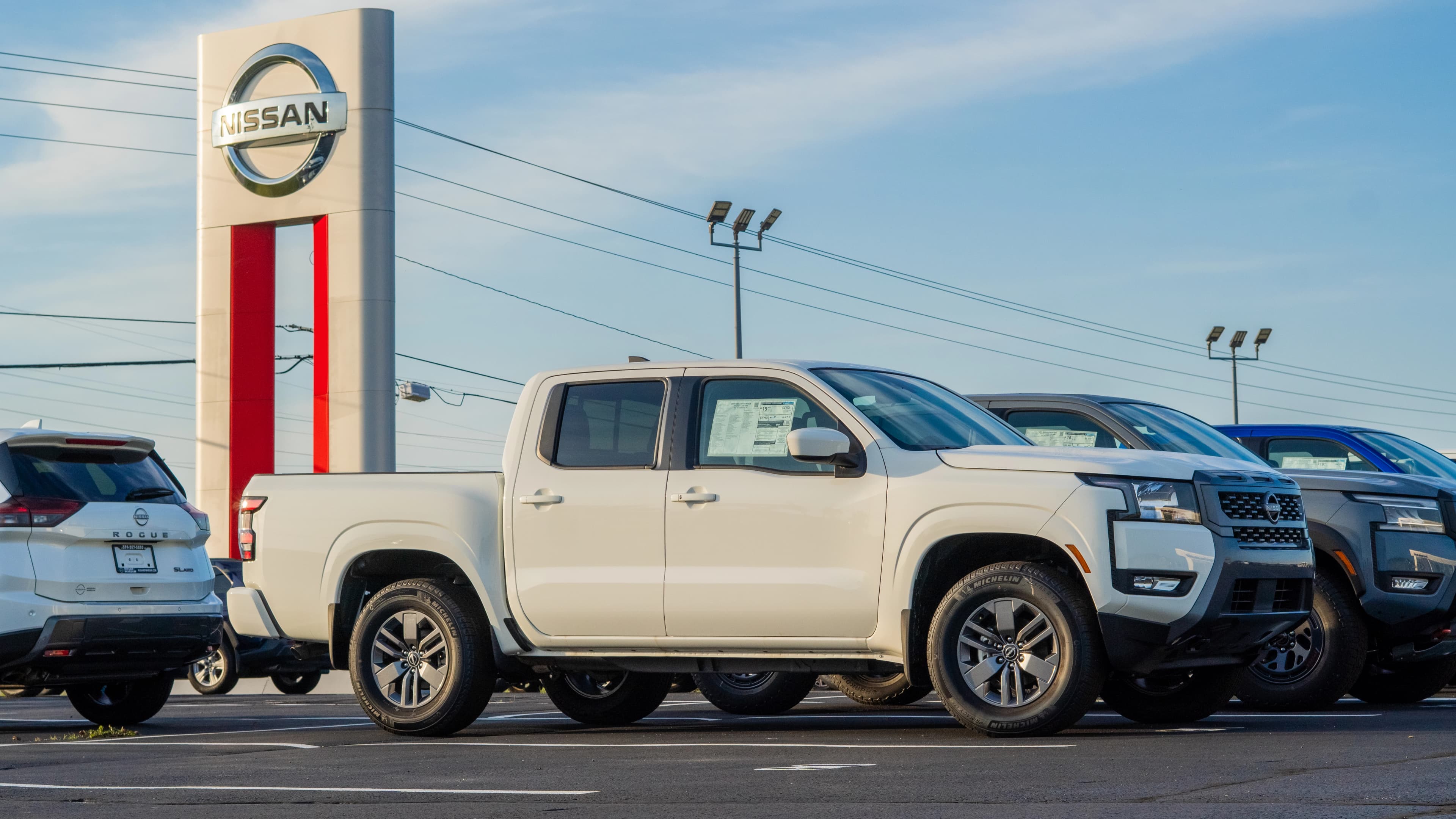
Behind every franchise sign is a long, manufacturer-drafted contract that defines what the dealer can and cannot do. Photo: Sweet Dreams US LLC
Inside the OEM Franchise Agreement: What Manufacturers Actually Control
Every franchise dealer operates under a long, complex contract with the manufacturer. Knowing what's inside that contract — and what isn't — is the difference between underwriting a dealership and underwriting a guess.
Every new-car dealership in the United States operates under a franchise agreement with the manufacturer whose vehicles it sells. The agreement is rarely short — most run forty to eighty pages of dense contract language, with appendices and addenda that can push the full document past two hundred. It is drafted by the manufacturer, presented largely on a take-it-or-leave-it basis, and signed by every dealer who wants the right to sell new Fords, Toyotas, Hondas, GMs, or any other franchised brand.
For an investor underwriting a dealership, that contract is not background paperwork. It is the operating constitution of the business. It defines what the dealer must do, what the manufacturer can require, what consents are needed to change ownership, and what happens if either side breaches. A diligence file that doesn't include a careful read of the franchise agreement is a diligence file with half the risk missing.
This chapter walks through what is actually inside a typical OEM franchise agreement, why each section matters operationally, and how Coleman Prime evaluates these contracts before committing capital to any acquisition.
The Contract Behind Every New-Car Sale
At its foundation, a franchise agreement is a master contract granting the dealer the right to sell and service a manufacturer's vehicles within a defined market area. The manufacturer agrees to supply vehicles, parts, training, warranty support, and the right to display brand trademarks. The dealer agrees to operate a franchised dealership in compliance with the manufacturer's standards. Everything else in the document is the detail of what those two commitments actually require.
Most modern franchise agreements are perpetual or operate on long-term automatic renewal subject to ongoing performance. The dealer is not signing a five-year deal that expires on a fixed date. The dealer is entering a relationship that continues indefinitely so long as the dealer meets the contract's performance and compliance obligations — and the manufacturer's leverage comes from defining what those obligations are.
The defined market area, sometimes called the Area of Primary Responsibility, is the geographic territory the dealer is expected to serve. It is not exclusivity — most agreements explicitly preserve the manufacturer's right to appoint additional dealers — but it is the geography against which the dealer's sales and service performance will be measured.
Performance Standards: How Manufacturers Measure Dealer Compliance
Every franchise agreement includes sales performance objectives. The most common framework is a minimum sales responsibility — often called MSR or a Sales Effectiveness measurement — calculated against the manufacturer's expectation for the dealer's territory. The expectation is typically derived from the brand's national or regional market share applied to the registration data inside the dealer's market area, with adjustments for local competitive intensity and segment mix.
If the brand holds a 10% national share and the dealer's territory registers 10,000 new vehicles a year, the manufacturer's expectation might be that the dealer sells roughly 1,000 units. A dealer hitting 1,100 is performing at 110% of expectation. A dealer hitting 700 is at 70% — and that gap is the foundation on which the manufacturer can begin to apply pressure, escalate review, and ultimately move toward termination if the underperformance persists.
Beyond top-line sales, the contract typically obligates the dealer to maintain minimum inventory levels by model line, to order vehicles in line with the manufacturer's allocation system, and to actively merchandise the full lineup rather than cherry-picking the most profitable units. The agreement is engineered to make sure the dealer is genuinely representing the brand — not just running a profitable storefront for the easiest models.
Facility, Service, and CSI Requirements
The franchise agreement also dictates the physical and operational standards the dealership must meet. The dealer must operate from an approved facility that satisfies the manufacturer's brand standards — square footage, showroom layout, signage, service bay count, customer lounge specifications, and exterior architectural elements. We will explore these image programs in detail in a later chapter; for now the relevant point is that the franchise agreement is the document that makes those standards contractually enforceable.
On the service side, the agreement requires the dealer to operate a factory-authorized service department capable of performing warranty work on every model the manufacturer sells. That obligation cascades into specific requirements: minimum certified technician headcount, minimum tooling and diagnostic equipment, minimum stocking levels for parts inventory, and adherence to factory-published labor times and warranty submission protocols.
Customer satisfaction is the third operational pillar. Most manufacturers measure dealer performance through a Customer Satisfaction Index — CSI for sales and CSI for service — based on surveys sent to recent customers. The contract typically requires the dealer to maintain CSI scores above defined thresholds, with consequences for repeated misses that can range from loss of incentive eligibility to formal performance improvement programs to, in severe cases, the start of termination proceedings.
By the Numbers
What the Franchise Agreement Controls
Sales performance — minimum unit sales against the manufacturer's territory expectation
Inventory and ordering — minimum stocking levels by model and adherence to the allocation system
Facility standards — approved location, square footage, signage, and image program compliance
Service operations — factory-authorized service department, certified technicians, parts stocking
Customer satisfaction — CSI scores above defined thresholds for both sales and service
Ownership transfer — manufacturer right of first refusal and approval over any change of control
The Ownership Transfer Choke Point
The single most consequential clause in any franchise agreement, from an investor's perspective, is the section governing ownership transfer. Virtually every manufacturer reserves the right to approve any new owner of a franchised dealership and, in most cases, holds a right of first refusal — the ability to step into a signed buy-sell agreement and acquire the dealership itself on the same terms negotiated by the third-party buyer.
In practice, the right of first refusal is rarely exercised by the manufacturer to actually take the store. What it accomplishes is something more important: it forces every transaction to flow through the manufacturer's review and approval process. The buyer must be vetted for capital, experience, character, and operational capacity. The deal terms must be disclosed. The transition plan must be acceptable. Without the manufacturer's written consent, the franchise does not transfer — and without the franchise, the buyer is acquiring real estate, fixed assets, and goodwill that have lost the only thing that made them a dealership.
This is the choke point in every dealership buy-sell. A signed asset purchase agreement is the start of the transaction, not the finish. The franchise approval timeline, the manufacturer's information requirements, and the dealer-candidate interview process all sit between the contract and the close — and any one of them can extend, reshape, or kill the deal. Investors who don't understand this dynamic chronically underestimate how long acquisitions actually take and how much execution risk lives in the approval window.
Termination Rights and the State Law Backstop
The franchise agreement spells out what triggers manufacturer-initiated termination. The standard list includes sustained failure to meet sales performance objectives, repeated CSI failures, breach of facility or service standards, financial insolvency, transfer of ownership without consent, and material misrepresentation in dealer reporting. The contract also defines the cure periods the dealer is entitled to before termination becomes effective.
On its face, that termination machinery looks one-sided in the manufacturer's favor. In practice, it is heavily constrained by state franchise protection statutes — laws that override the contract by requiring manufacturers to demonstrate "good cause" before any termination can take effect, with the burden of proof generally on the manufacturer and judicial or administrative review available to the dealer. We covered the investor-protection consequences of those state statutes in our earlier post on franchise law as a legal moat; the relevant point here is that the contract and the state law operate together. The franchise agreement defines what the dealer must do; the state statutes define what the manufacturer must prove before it can act on a failure.
The combination is what makes a well-performing franchised dealership one of the most defensible operating businesses in American commerce. The dealer is contractually bound to perform — but the manufacturer cannot arbitrarily revoke the franchise even if it would prefer a different operator. That balance is what underpins the durable cash flows that institutional capital is now actively pursuing in the dealership sector.
What Investors Actually Inherit
When Coleman Prime acquires a dealership, the franchise agreement is one of the first documents we read in detail. We are looking at the version on file with the manufacturer for that specific point — agreements vary across brands and across the addenda each store has accumulated over time — and we are mapping every obligation it imposes against the operational reality we are about to inherit. Open performance issues, pending facility upgrade commitments, prior CSI sanctions, and any open correspondence with the manufacturer all surface in that review.
We then work the relationship side in parallel. The manufacturer must approve us as the new dealer-operator, and that process begins long before the buy-sell closes. Our team's prior dealer-principal experience, the operating capital we are bringing, and the specific business plan for the store all become part of the manufacturer's evaluation. Investors capitalizing the fund are, in effect, capitalizing operators the manufacturers have already vetted and approved — which is itself part of the moat the asset class offers.
The franchise agreement is not glamorous reading. It is, however, the document that turns a building full of vehicles into a franchised dealership — and it is the document that determines what an investor can and cannot do with that dealership once acquired. Underwriting a dealership without understanding its franchise agreement is underwriting half the asset.
Prime Insight
Coleman Prime treats the franchise agreement as a Tier 1 diligence document on every acquisition.
Every section — performance objectives, facility commitments, service obligations, CSI history, transfer mechanics — is reviewed before the buy-sell is signed, not after.
Open obligations and prior manufacturer correspondence are mapped to dollar exposure and surfaced in the investment committee memo.
Manufacturer approval of our team as dealer-operator is pursued in parallel with the transaction, so closing risk is managed end-to-end.
Prime Dealer Equity Fund is a private equity vehicle co-investing with Coleman Automotive Group in the acquisition and optimization of automotive dealerships across the United States.
For qualified investor inquiries:
→ Contact our investor relations team