

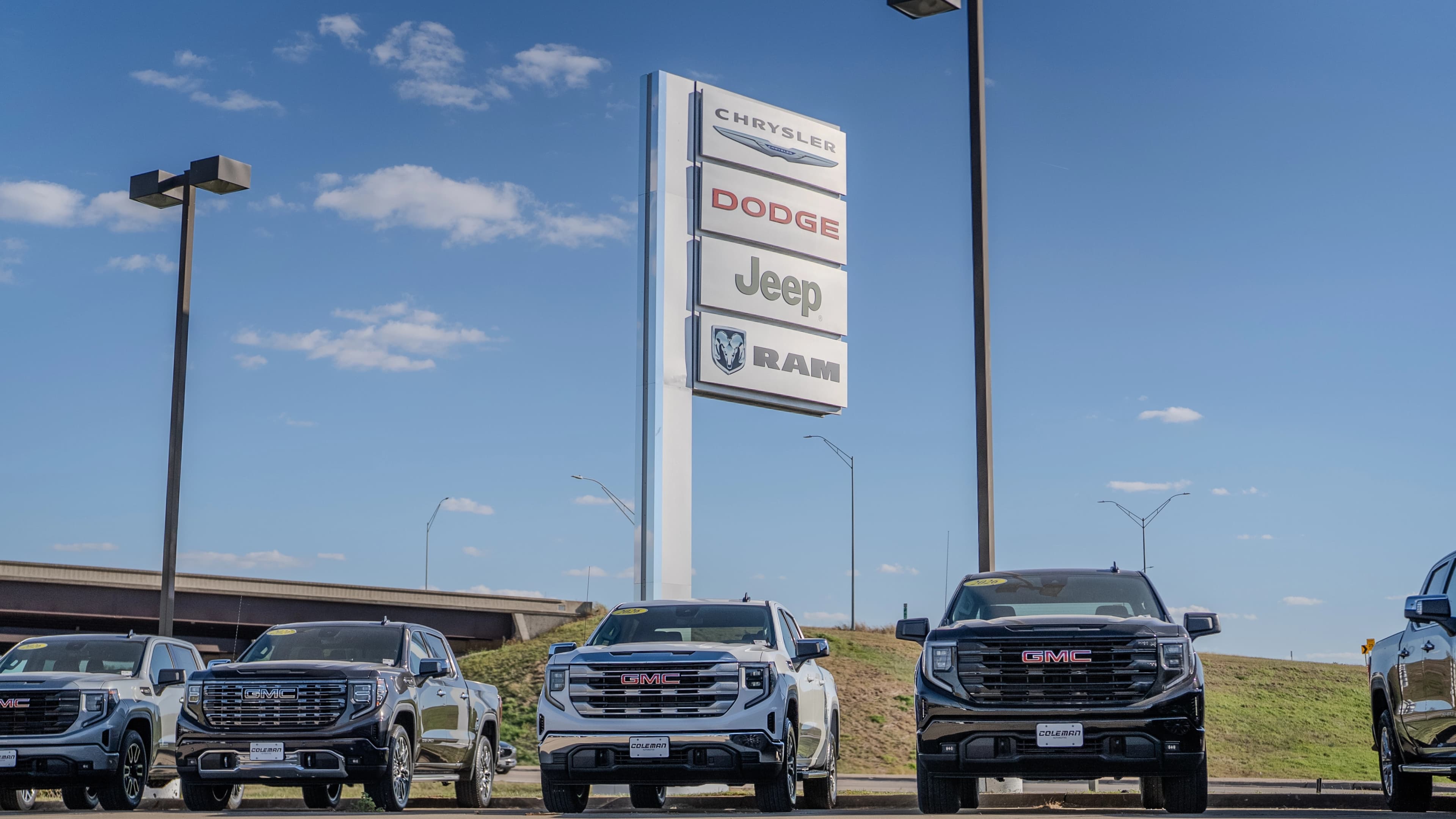
Every fund investment flows into identified, tangible dealership assets. The co-investment model means Coleman Automotive deploys capital side by side with investors in every acquisition. Photo: Sweet Dreams US LLC
How Our Co-Investment Model Aligns Our Interests with Yours
When the operator’s money is in the deal alongside yours, the incentives stop being theoretical.
The most common question we hear from prospective Fund investors is not about the dealerships. It is about alignment.
They want to know: when things go wrong, whose money is at risk? When a store underperforms, who absorbs the first hit? When a deal looks attractive on paper but falls apart in diligence, who has the financial incentive to walk away instead of forcing a close?
These are the right questions. They are the questions that separate investors who have been burned by misaligned fund structures from those who have not been burned yet. And they are the questions that the architecture of Prime Dealer Equity Fund was designed to answer before they are asked.
The Fund operates on a co-investment model. That means Coleman Automotive does not act as a hired manager collecting fees on investor capital. Coleman Automotive invests its own corporate capital alongside the Fund in every acquisition. The operator’s balance sheet is at risk in the same deals, on the same terms, with the same exposure. When we say our interests are aligned, we are not describing a philosophy. We are describing a capital structure.
What Co-Investment Actually Means
In private equity, “alignment” is one of the most overused and least substantiated claims in the industry. Fund managers talk about alignment constantly. They build slide decks about it. They reference it in every investor letter. And in many cases, the structural reality behind the word is thin — a small GP commitment, a fee structure that pays the manager regardless of performance, and an incentive arrangement that rewards asset accumulation over asset quality.
The Prime Dealer Equity Fund investment strategy operates differently.
Coleman Automotive is the majority owner and operator of every dealership the Fund invests in. This is not a Fund that acquires assets, hires third-party management, and hopes for the best. The operator — the team that physically walks the lot, runs the service bays, manages the inventory, and oversees the P&L — has its own capital deployed alongside the Fund’s capital in every single acquisition in the Fund’s portfolio.
This creates a loss-avoidance incentive that no management fee structure can replicate. When the operator’s own wealth is built on the long-term profitability of the dealerships rather than on fees charged against committed capital, the incentive to conduct rigorous diligence, enforce operational discipline, and walk away from bad deals is not a policy. It is a financial imperative.
From the Floor
“Every deal I evaluate, I’m evaluating with my family’s capital on the line. That’s the filter that matters. Not the spreadsheet, not the broker’s pitch — the question of whether I would put my own money into this store. If the answer is no, nobody’s money goes in.”
— Kyle Coleman, CEO
→ Meet the leadership teamThe Capital Stack: Where Investor Money Sits
Understanding where investor capital sits in the deal structure is essential to understanding the risk profile.
In a typical dealership acquisition, the capital stack has three layers. At the top — senior to everything — is the bank debt: floorplan financing, real estate mortgage, or acquisition credit facility. This is the money the lender provides, and it has first claim on the dealership’s assets if something goes wrong.
Below the bank debt sits the Fund’s minority investment, structured as preferred equity. “Preferred” means exactly what it sounds like: the Fund’s capital has priority over the operator’s common equity in the distribution waterfall. In a downside scenario — reduced profitability, forced liquidation, or a sale below expectations — the preferred equity holders are satisfied before the common equity holders receive anything.
Below the preferred equity is Coleman Automotive’s controlling interest held in common equity — the operator’s own capital, which is the last to be paid and the first to absorb losses.
This layering is not incidental. It is the structural mechanism that protects investor capital. The operator’s common equity sits beneath the Fund’s preferred equity in the stack, which means Coleman Automotive takes the first loss before a dollar of investor principal is impaired. The operator has every financial incentive to prevent that scenario — because their own money disappears first.
Each Fund portfolio investment is structured to flow into a specific LLC that owns the dealership and its associated real estate. Investors are not buying into an opaque, pooled vehicle where capital disappears into a black box. They are buying into identified, tangible assets — buildings, land, inventory, franchise agreements — with inherent liquidation value that exists independently of the operation’s performance.
The Waterfall: How Money Flows Back
The distribution waterfall defines the order in which cash flows are returned to Fund investors and the operator. In the Prime Dealer Equity Fund, the waterfall is built around a single principle: the Fund investor’s capital is returned prior to the common equity held by the operator.
Tier 1 — Return of Capital. One hundred percent of distributable cash flow is directed to Fund investors until their original investment has been fully returned. This is not a split. This is not a pro-rata distribution. Every distributable dollar goes back to the investor until their principal is whole. The fund projects a full capital return within five years — a timeline driven by the intensive 90-day turnaround strategy and the operational optimization that follows.
Tier 2 — Preferred Return. Alongside the return of capital, the fund targets a minimum of 8% annual yield. This functions as the hurdle rate — the minimum performance threshold that must be cleared before the operator participates in any upside. In institutional private equity, an 8% preferred return is the standard floor that LPs expect before a GP earns carried interest. The Prime Dealer Equity Fund benchmarks against that institutional standard.
Tier 3 — Residual Equity. After the initial capital is returned, Fund investors still collectively retain a 35% equity stake in the acquiring entity.

This waterfall structure inverts the incentive problem that plagues many alternative investment vehicles. In a traditional fund, the manager may earn carried interest or performance fees before the investor has fully recovered principal — creating a perverse incentive to generate short-term returns at the expense of long-term capital preservation. In this structure, the operator earns nothing beyond their operating compensation until the investor’s capital has been returned and the 8% hurdle has been cleared.
By the Numbers
The Distribution Waterfall
Tier 1: 100% of cash flow → investors (until full capital return, projected within 5 years)
Tier 2: Target minimum of 8% annual preferred return (hurdle rate)
Tier 3: 35% residual equity retained by investors after capital return
The operator does not participate in upside until investor principal is returned.
The 35% Residual: Why It Matters Long-Term
The residual equity stake is the feature of this structure that most clearly separates it from a debt instrument or a traditional syndication.
Once the investor’s initial capital has been returned — projected within five years — they do not exit the deal. They retain a collective 35% equity stake in the acquiring entity. This means they continue to receive 35% of ongoing profits and 35% of the proceeds from any eventual sale of the asset. Their relationship with the dealership transitions from a capital-recovery phase to a long-term equity participation phase — without deploying any additional capital.
For early investors, the compounding effect is significant. As Coleman Automotive uses retained earnings from stabilized stores to fund subsequent acquisitions, the portfolio grows without necessarily requiring new capital raises that dilute existing investors. The 35% residual stake that originally represented an interest in a handful of Iowa dealerships gradually represents an interest in an increasingly diversified, multi-brand, multi-geography dealership group on its way to 40 rooftops.
This is the structural mechanism that transforms the fund from a yield instrument into a long-term wealth creation vehicle. The investor targets full capital recovery, a targeted minimum of 8% annual yield during the recovery phase, and then holds a permanent equity position in a growing enterprise — all from a single initial allocation. Actual returns may vary and are not guaranteed.
The Comparison: Why This Structure Outperforms Standard Models
Investors who have participated in real estate syndications, private credit funds, or traditional PE vehicles will recognize the architecture — but with key differences that favor the LP.
In a standard “American-style” waterfall, carried interest can be earned by the GP on a deal-by-deal basis, meaning the manager can profit from one successful deal even while other deals in the portfolio underperform. The Prime Dealer Equity Fund’s investor-first structure mirrors the “European-style” waterfall used by large infrastructure and buyout funds — where investor capital is returned across the entire portfolio before the operator participates in any upside.
In a typical real estate syndication, investors receive pro-rata distributions from day one, which feels satisfying but means principal recovery is slow and often depends on a terminal sale event years down the road. The Prime Dealer Equity Fund prioritizes capital return velocity — getting the investor’s initial investment returned as fast as the operational turnaround allows, allowing investors to remain invested for capital gains participation.
In private credit or mezzanine lending, the investor receives a fixed yield but has no equity upside. They are a lender, not an owner. The Prime Dealer Equity Fund combines the downside protection of preferred equity with the long-term upside of residual ownership — a hybrid that is rarely available outside of institutional co-investment vehicles.
The result is a structure that does three things simultaneously: it protects your initial investment through preferred positioning and priority return, it generates current income through the 8% target yield, and it creates long-term wealth through the 35% residual equity in a growing portfolio. Most alternative investment structures accomplish one of these. Very few accomplish all three.
Prime Insight
The Fund’s structure is not a traditional syndication or a debt instrument. It is a preferred equity co-investment that combines capital preservation, current yield, and permanent equity participation in the Fund’s growing dealership portfolio — invested in tangible real estate and co-invested with the operator with capital to risk alongside every investor.
The Governance Layer: Who Watches the Operator
Structural alignment through co-investment is the primary protection for Fund investors. But governance adds a second layer.
The Prime Dealer Equity Fund is managed by Prime Management Partners, LLC (the Fund Manager), for which Ralph Marcuccilli serves as the Managing Member. Ralph is an entrepreneur with over three decades of institutional executive leadership in banking, fintech, and investment scaling. Before joining the Fund Manager, Marcuccilli founded and led Allied Payment Network, a fintech company that scaled to serve nearly 500 financial institutions across 49 states representing over $310 billion in underlying assets. He successfully guided that company through substantial private equity capital raises and strategic partnerships with firms like Plymouth Growth Partners and RF Investment Partners.
Kyle Coleman is the CEO of Coleman Automotive, which will be the majority owner and operator of the Fund’s portfolio dealerships. Ralph Marcuccilli serves as the Managing Member of the Fund Manager. The two roles are structurally separated — what we describe in the next post in this series as the “church and state” governance model. Coleman is focused entirely on driving EBITDA at the dealership rooftop level. Marcuccilli is focused entirely on Fund governance, capital deployment, regulatory compliance, and limited investor communications.
This separation exists for one reason: so that no single individual controls both the operation of the dealerships (Fund assets) and the management of investor capital. The Fund Manager watches the operator’s performance on behalf of the Fund investors. The operator watches the Fund Manager’s capital deployment on behalf of the dealerships. Neither has unchecked authority, and both are accountable in this structure.
For investors who have seen Funds where the founder is also the operator, and the fund manager, the compliance officer, and the IR department all in one person — this separation provides for accountability under a governance standard.
What This Means for the Investor
The co-investment model does not eliminate risk. Automotive retail is cyclical. Interest rates affect consumer demand. Manufacturer decisions affect inventory. Economic contractions affect the sales floor. These are real risks that exist in any dealership investment.
What the structure does is ensure that every one of those risks is shared. The operator’s capital is exposed to the same risks as the investor’s capital. The waterfall prioritizes the investor’s recovery before the operator’s investment. The preferred equity position provides a structural buffer. The tangible real estate of the dealership held as an indirect Fund investment provides liquidation value. And the 35% residual ensures that the limited investors participate in the long-term upside that the operator’s talent-first team and fixed operations expertise are incentivized to create.
Prime Dealer Equity Fund is a private equity vehicle co-investing with Coleman Automotive Group in the acquisition and optimization of automotive dealerships across the United States.
For qualified investor inquiries:
→ Contact our investor relations team