
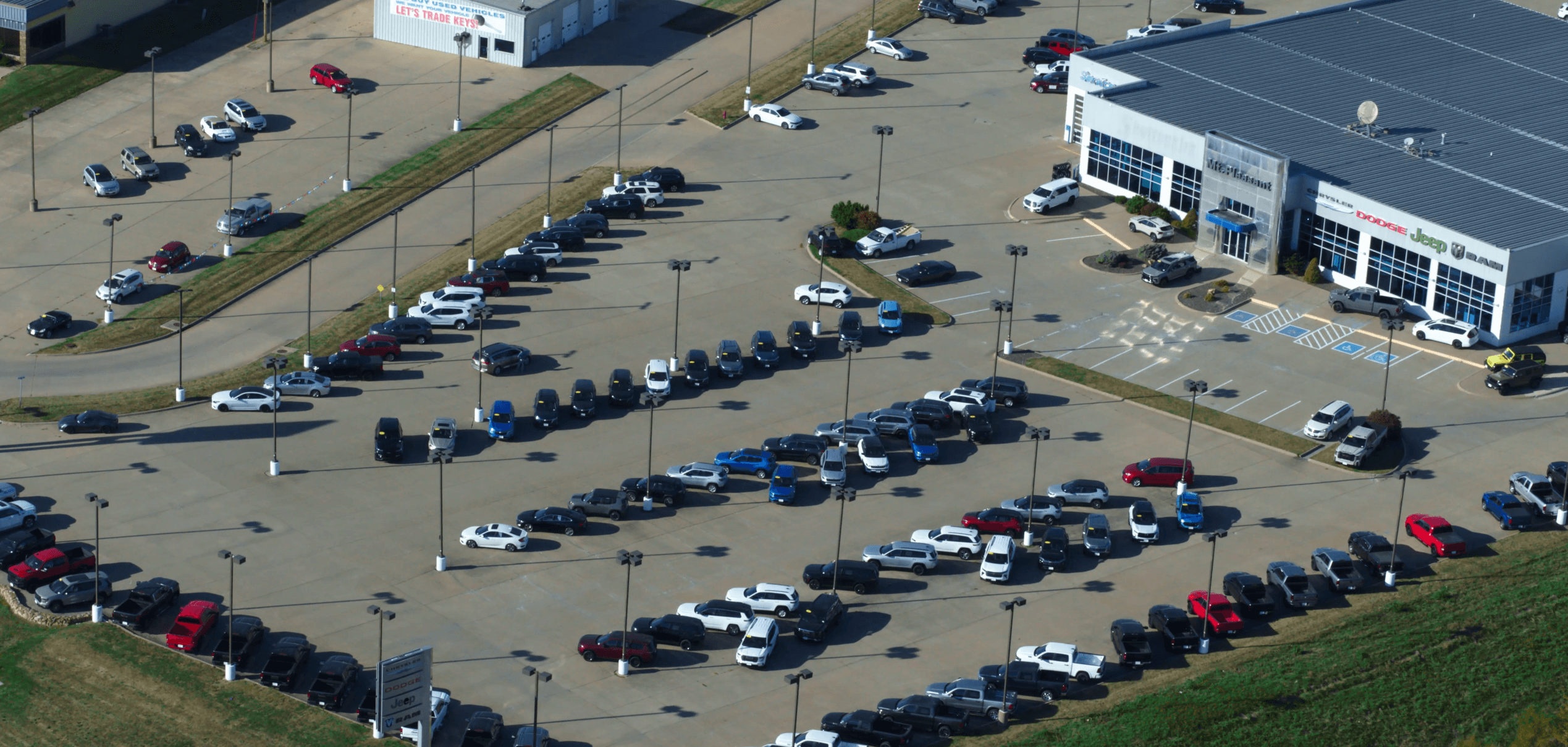
Not every acquisition makes the cut. Deal discipline means walking away when the fundamentals don’t align — even after the checks have been written. Photo: Sweet Dreams US LLC
We Walked Away from a Deal — and Lost $35,000 Doing It. Here’s Why.
The hardest discipline in dealership acquisitions is not finding the right deal. It is walking away from the wrong one.
We do not talk about this deal publicly to demonstrate how disciplined we are. We talk about it because investors deserve to know what happens when the numbers do not work — and what we do about it.
Earlier in our acquisition trajectory, we identified a dealership that looked, on paper, like a transformational target. The store had high volume, strong top-line revenue, and a facility that could produce more net profit on its own than our entire existing portfolio at the time. The seller was motivated. The financial models projected well. Everything about the opportunity signaled that this was the deal that would accelerate our timeline by years.
We spent $35,000 on legal fees, professional due diligence, and advisory costs moving the transaction forward. Then we killed it. We walked away, absorbed the loss, and moved on to the next opportunity.
This post explains why. And for the investors who deploy capital through Prime Dealer Equity Fund, it explains something more important: how we think about risk when nobody is watching.
The Attraction: Why This Deal Looked Right
To understand why walking away was difficult, you have to understand why the deal was attractive in the first place.
The target was a high-volume franchise with significant brand recognition and a physical facility that would immediately elevate the scale of the group. The store’s historical financials showed strong performance across variable and fixed operations. The seller was ready to transact, which meant the timeline was compressed and the opportunity would not sit on the market indefinitely.
For a group in aggressive growth mode — executing a Road to 40 rooftops strategy — a deal like this represents a potential inflection point. One acquisition that changes the trajectory. One store that proves to the market, to lenders, and to manufacturers that the group can operate at a different level.
The temptation to close was enormous. And that is precisely the moment where deal discipline either holds or it doesn’t.
What the Diligence Uncovered
Our due diligence process is not a checkbox exercise. It is a forensic evaluation of every dimension of the target — financial, operational, regulatory, and structural. We engage specialists across legal, accounting, and operational consulting to stress-test the acquisition thesis against real-world conditions. The process is designed to find the problems that the seller’s presentation does not highlight and the broker’s book does not mention.
In this case, the problems were regulatory.
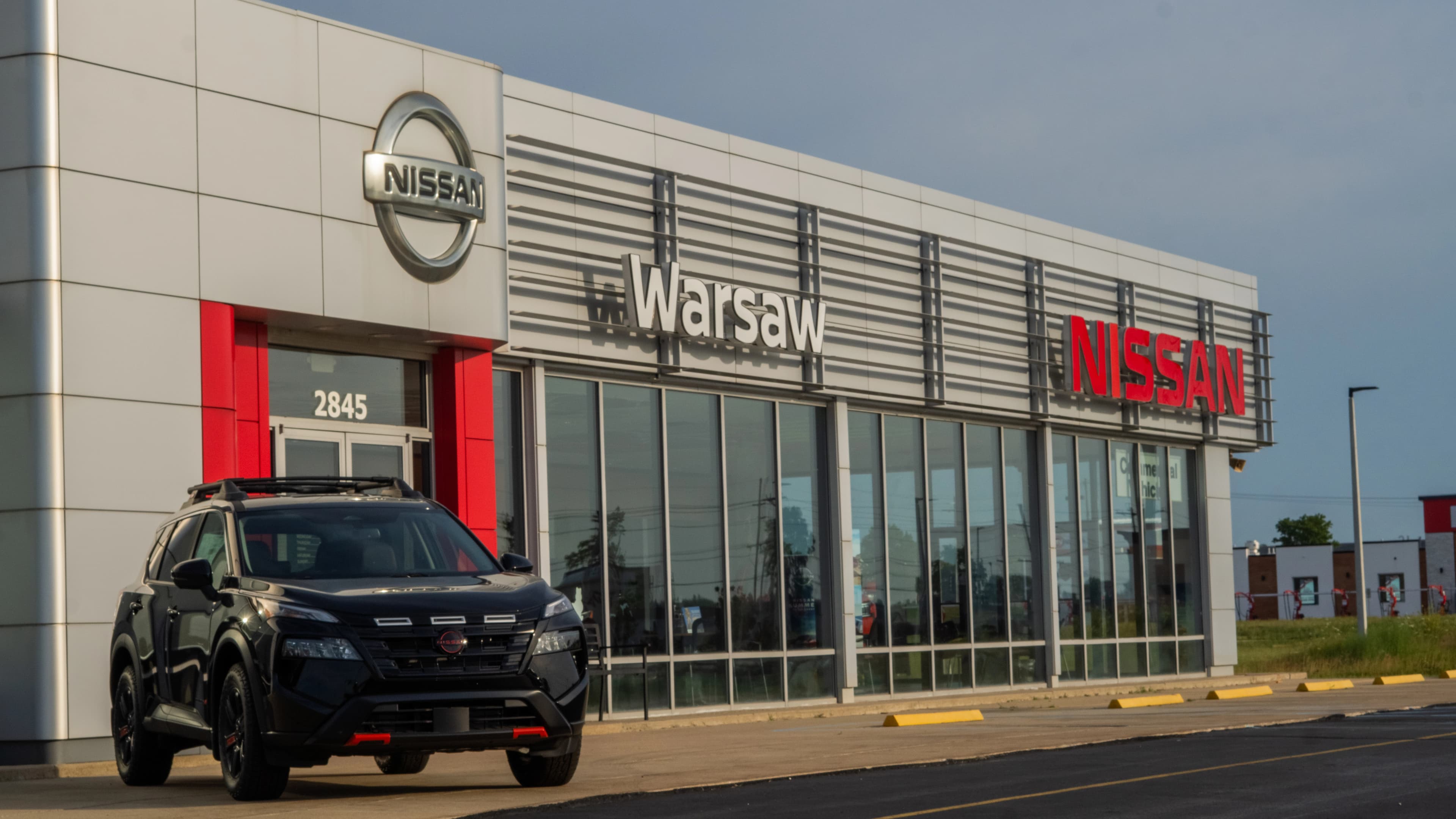
The first issue was the facility’s exposure to EV infrastructure mandates. The manufacturer associated with this franchise had committed to aggressive electrification targets and was requiring its dealer network to invest heavily in charging infrastructure, EV-specific service tooling, and sales training certification. The mandated capital expenditure for the target store was substantial — in the range of $250,000 to $1.3 million depending on the compliance tier. This was not a future possibility. It was a contractual obligation tied to the franchise agreement that would transfer to the new owner at closing.
The second issue was CAFE compliance risk. Corporate Average Fuel Economy standards set by NHTSA require manufacturers to meet fleet-wide fuel economy targets. When a manufacturer produces a higher mix of EVs to satisfy those standards — vehicles that currently take longer to sell and generate significantly less per-unit profit than their ICE counterparts — the inventory burden falls on the dealership. The target store was positioned to absorb a disproportionate share of slow-turning EV inventory that the manufacturer needed to push into the retail pipeline to meet its compliance obligations.
The per-unit economics made the exposure clear. Industry data shows that retailers average approximately $740 in profit per EV sold, compared to roughly $2,400 per ICE vehicle. When you layer mandated infrastructure costs on top of compressed per-unit margins on top of slower inventory turns on top of uncertain federal tax credit availability, the projected return on deployed capital erodes materially.
Neither of these issues was visible in the seller’s trailing financials. The store’s historical performance reflected an era of different regulatory assumptions. Our diligence was designed to model forward — to evaluate what the store would look like under the regulatory conditions that were already in motion, not the conditions that produced last year’s P&L.
The Decision: $35,000 Lost, Millions Protected
When the regulatory picture became clear, we had a choice. We could proceed with the acquisition and hope that the EV transition would slow down, that the mandates would be relaxed, or that consumer demand for electrified vehicles would accelerate fast enough to close the profitability gap. Or we could accept that the fundamentals had changed, absorb the sunk costs, and redirect our capital toward targets where the risk-reward alignment was cleaner.
We chose to walk away.
The $35,000 in legal and advisory fees was gone. That money does not come back. And the psychological cost was real — months of work, relationship capital invested with the seller, and the internal momentum of a team that had been building toward a close.
But the alternative was worse. Proceeding with a deal where the forward-looking regulatory exposure could not be reconciled would have meant deploying investor capital into an asset with structural headwinds that no amount of operational excellence could fully offset. We can optimize a sales floor. We can restructure a service department. We can re-negotiate vendor contracts and inject elite leadership talent. What we cannot do is change the manufacturer’s EV production mandate or rewrite federal fuel economy standards.
From the Floor
“We’ve walked away from deals that would have doubled the size of the group overnight. The math has to work — not just on the trailing financials, but on what the store looks like in three years under the regulatory environment that’s already coming. If we can’t reconcile those numbers, we don’t close.”
— Kyle Coleman, CEO
→ See how Coleman evaluates and executes acquisitionsThe Sunk Cost Fallacy — and Why It Kills Deals
The most dangerous moment in any acquisition process is the moment after you have already spent money on it.
The sunk cost fallacy is the psychological tendency to continue investing in a failing course of action because of the resources already committed. In dealership M&A, it sounds like this: “We’ve already spent $35,000 on legal. We’ve already spent three months on diligence. The seller is expecting us to close. If we walk away now, all of that is wasted.”
Every one of those statements is true. And none of them change the fact that the deal is bad.
The $35,000 is gone whether we close or not. The three months are gone whether we close or not. The only question that matters is: does the deal, evaluated from this point forward with no regard for what has already been spent, represent a responsible deployment of investor capital? If the answer is no, the only rational decision is to stop.
This is not an abstract principle for us. It is a practice. We set maximum bid limits and walk-away thresholds before negotiations begin — not during them. We define the conditions under which we will abort before the emotional momentum of a deal makes that decision harder. And we staff our executive team with people who have the analytical rigor and emotional detachment to enforce those thresholds when the pressure to close is at its highest.
The $35,000 we lost on this deal is the cheapest insurance policy we have ever purchased. The ongoing compliance costs, mandated facility upgrades, and inventory obsolescence risk we would have inherited by closing would have been measured in multiples of that number — every year, for the life of the investment.
By the Numbers
The Economics of Walking Away
Sunk cost absorbed: $35,000
EV infrastructure mandate (if closed): $250K – $1.3M
Per-unit profit gap: $740 (EV) vs. $2,400 (ICE)
The $35,000 loss protected investor capital from structural exposure that no operational turnaround can fully offset.
Valuation Discipline: We Don’t Pay for Potential
The EV and CAFE issues on this specific deal were the immediate disqualifiers. But they exposed a broader principle that governs every acquisition we evaluate: we do not pay for potential. We pay for trailing performance.
In the buy-sell market, sellers and their brokers frequently present valuations based on what the store could do — projected improvements, anticipated manufacturer incentive programs, hoped-for market conditions. These projections are not grounded in verified operational reality. They are grounded in optimism, and optimism is not a financial instrument.
Our acquisition pricing is based strictly on what the store has actually done — trailing adjusted pretax earnings, verified through forensic financial review. If a seller believes their store is worth more based on future upside, that is a conversation about their expectations, not our capital. We have seen sellers reject our offers based on this discipline, only to return months later after their profitability dropped while the store sat on the open market, ready to accept the number we originally proposed.
This approach frustrates sellers who are accustomed to the competitive dynamics of a brokered auction where multiple bidders drive prices above fundamental value. But for our investors, it means every dollar of capital is deployed at a valuation anchored in verified reality — not in the seller’s best-case scenario.
Why This Matters for Fund Investors
We share this story because investors in a private equity fund deserve to see how decisions are made when the stakes are real and the pressure is high. It is easy to announce acquisitions. It is easy to talk about growth. It is significantly harder to explain the deals you did not do — and why not doing them was the right call.
The willingness to walk away — to absorb a financial loss in order to avoid a structural one — is not a failure of execution. It is the execution. It is the mechanism that ensures investor capital flows only into assets where the operational upside is genuine and the regulatory risk profile has been fully evaluated.
For every store in the Coleman Automotive portfolio, there is a story like this one behind it — a deal that was evaluated, stress-tested, and either closed or killed based on forward-looking fundamentals, not backward-looking momentum. The stores that made it through that filter are the ones generating returns today. The ones that didn’t — including the one that cost us $35,000 to walk away from — are somebody else’s problem.
Prime Insight
Prime Dealer Equity Fund’s co-investment model means that Coleman Automotive has capital at risk alongside every investor in every acquisition. The operator’s money is in the deal. When we walk away from a bad one, we are protecting our own capital and yours.
The Discipline Continues
We are currently evaluating multiple acquisition targets as part of the Road to 40 strategy. Some of them will close. Some of them will not. The ones that do not close will cost us time, money, and effort that we will never recover. And that is exactly how it should work.
The alternative — closing deals that should have been killed because the sunk costs felt too painful to absorb — is how dealership groups implode. It is how investor capital gets deployed into stores that look good on the announcement but bleed value for years afterward. It is how operators lose the trust of the capital partners who funded the growth.
We would rather lose $35,000 on a deal we walked away from than lose millions on a deal we should have.
Prime Dealer Equity Fund is a private equity vehicle co-investing with Coleman Automotive Group in the acquisition and optimization of automotive dealerships across the United States.
For qualified investor inquiries:
→ Contact our investor relations team