
The Coleman Automotive leadership team. Several key executives relocated their families across the country to join the group — because the opportunity demanded it. Photo: Sweet Dreams US LLC
Why We Pay Our People More Than We Can Afford — And Why It Works
The talent doesn’t follow the revenue. The revenue follows the talent.
The conventional wisdom in business scaling is straightforward: grow your revenue first, then hire the talent you can afford. Build the machine, then staff it. The logic sounds responsible. It is also the single most reliable way to ensure that a rapidly scaling organization collapses under its own weight.
Coleman Automotive Group operates on the opposite principle. We hire the talent first — before the revenue justifies it, before the balance sheet is comfortable with it, and sometimes before the organization even has the infrastructure for the role to fill. We pay people more than we can technically afford, deliberately, because twenty years of building and scaling businesses has taught us one thing with absolute certainty: the revenue follows the talent. It does not work the other way around.
This is not reckless spending. It is the most calculated investment we make. And for the investors who deploy capital through Prime Dealer Equity Fund, understanding why we operate this way is essential to understanding why the stores we acquire perform the way they do.
The Chicken or the Egg — and Why We Chose the Chicken
Every growing organization eventually hits the same inflection point. The workload has outpaced the team. The complexity has outpaced the skillset. The founder is stretched across too many roles, making decisions in areas where they lack deep expertise, and the cracks are starting to show.
At this moment, conventional operators wait. They tell themselves they will hire a real CFO once the group hits ten stores. They will bring in a Director of Fixed Operations once service revenue crosses a certain threshold. They will recruit a COO once the daily chaos becomes unmanageable. The hire is always positioned as a reward for growth already achieved — not as the engine that creates the growth in the first place.
We call this the “chicken or the egg” problem, and we resolved it early. The answer, for us, is unambiguous: you get the talent first. You hire the person who is going to build the infrastructure for the next phase of scale before you are in that phase. You pay them a premium that the current balance sheet does not comfortably support, because what they bring — the operational frameworks, the financial discipline, the institutional knowledge, the network — is the thing that makes the next phase of scale possible.
The alternative is building a house while simultaneously trying to pour the foundation. It does not work. We have watched it not work across dozens of dealership groups that tried to grow fast on a thin leadership bench. The stores get acquired, the revenue spikes, and then the whole thing fractures because nobody in the building has the experience to manage what just happened.
From the Floor
“I’d rather overpay for someone who loses sleep over this business than save money on someone who clocks out at five. The ROI on a leader who treats your company like their own is not even close.”
— Kyle Coleman, CEO
→ Meet the Coleman Automotive leadership teamThe CFO Who Moved Across the Country
The clearest example of how this philosophy works in practice is the way we recruited our Chief Financial Officer.
When we made the decision to bring in a veteran CFO, we were not at a scale that traditionally justified the role. We were a young, fast-growing group with a handful of stores in rural Iowa. By any conventional hiring metric, a mid-level controller would have been the “appropriate” hire for our size. Instead, we recruited a CFO with two decades of top-tier automotive finance experience — someone who had to relocate their family across the country to take the role. The compensation package we offered was deliberately above what our current revenue could comfortably support.
The logic was simple. We were not hiring for where we were. We were hiring for where we were going. And the path from a handful of stores to forty rooftops requires financial architecture that a mid-level controller cannot build.

Within months, the impact was measurable. The veteran CFO restructured capital efficiency across every acquisition. They optimized cash flow velocity, accelerated contracts-in-transit funding, and consolidated debt structures to lower blended interest rates across the portfolio. They identified capital leakage — silent, compounding inefficiencies like redundant software subscriptions, billing errors, and misaligned vendor terms — that a less experienced hire would have never caught. They built the internal control environment that prevents fraud and mismanagement during the exact phase of growth where those risks are highest: when you are adding stores faster than you are adding oversight.
The premium we paid in salary was recovered within the first year through capital the CFO saved, restructured, or unlocked. That is not a guess. That is the math.
But the impact goes beyond the internal financials. When we approach institutional lenders for floorplan financing or real estate credit facilities, the presence of a heavily credentialed CFO on the executive team changes the conversation. Lenders are not just evaluating the dealerships. They are evaluating the people running the money. A veteran financial executive signals to capital partners that the operational ambition is matched by financial sophistication — and that lowers the cost of capital for every subsequent acquisition.
Fixed Operations: The Hire That Protects the Investment
The same logic applies to the service side of the business. We wrote in a previous post about the “four-legged stool” and the concept of fixed absorption — the ability of the service and parts department to cover the dealership’s entire fixed overhead. That number is the single most important metric for determining whether a store survives a downturn. It is also the metric that is most directly impacted by the quality of the person running fixed operations.
A veteran Director of Fixed Operations does not manage the service department. They re-engineer it.
They restructure technician dispatching to maximize billable hours per bay. They audit parts inventory to eliminate obsolescence and free up trapped working capital. They negotiate statutory retail rate increases for manufacturer warranty work — a highly technical process where most dealerships leave money on the table. They implement triage lane systems that increase throughput without expanding the physical footprint. And they build the customer retention frameworks that convert a satisfied vehicle buyer into a lifetime service client.
When we acquire an underperforming dealership — the kind of store we described in the generational transfer post, where the previous owner stopped investing in the operation years ago — the Director of Fixed Operations is one of the first people through the door. They impose the advanced operational architecture immediately, because the service department is what stabilizes the store while the sales floor is being rebuilt. You cannot afford to wait for the store to “earn” a great fixed ops leader. The store needs the leader to start earning.
By the Numbers
Fixed Operations as % of Total Dealership Gross Profit
2019 (Pre-Pandemic): 42%
2025 (Current): 49%
The service bay can be the single largest profit center in the average dealership — and the quality of the person running it affects that profit.
The Box: Autonomy Within a Framework
Hiring expensive leaders and then micromanaging them defeats the entire purpose. The talent-first philosophy only works if it is paired with a management structure that lets the talent actually operate.
At Coleman Automotive, we use a framework we call “the box.” The box is defined by two things: a set of non-negotiable core values and a set of minimum performance standards. These are the walls. Inside those walls, the leader — whether it is a General Manager running a specific store, a Director overseeing a department across the group, or a CFO managing the financial architecture — has complete operational autonomy.
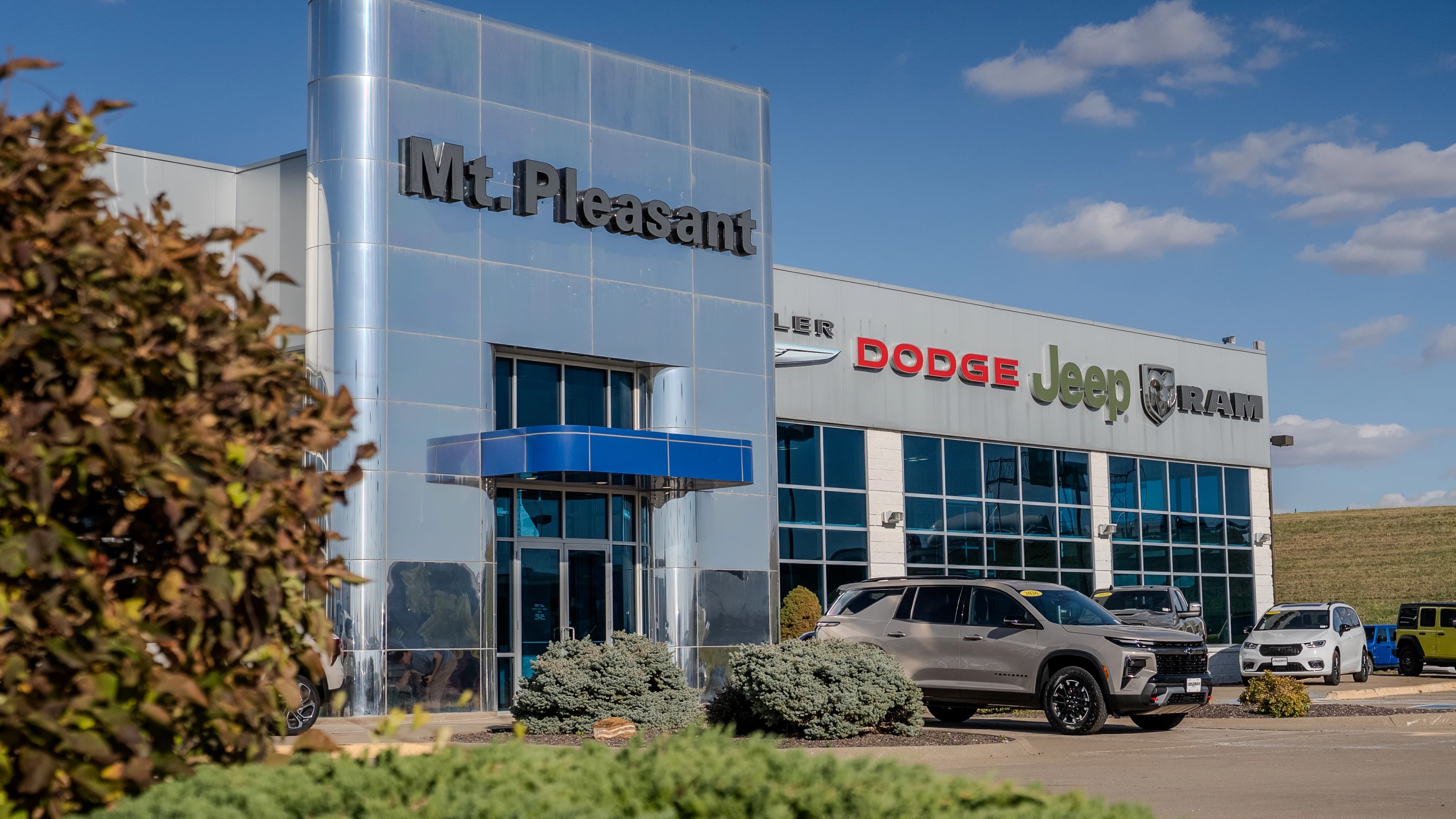
A General Manager in a rural agricultural market needs entirely different inventory, marketing, and staffing strategies than a GM in a suburban metro. We do not pretend to know the local market better than the person we hired specifically because they know the local market. If they are operating within the box — hitting the minimum KPIs, upholding the core values, and running the store in a way that is consistent with the brand — they have full authority to make tactical decisions without calling corporate for permission.
This is not hands-off management. It is high-trust management. The box creates a clean accountability structure: if a leader has total autonomy and the store underperforms, the diagnosis is clear. There is no ambiguity about whether corporate interference caused the problem. The leader was empowered, resourced, and compensated at a premium. The results are theirs.
This structure is what allows us to scale. Every store we add does not require proportionally more corporate oversight because the people running those stores were hired to operate independently. The talent-first investment pays for itself not once but continuously — every time a GM solves a problem locally that would have otherwise required a corporate fire drill, every time a department head captures margin that a less experienced operator would have missed.
Vendor Accountability: What the Right Leaders Kill First
One of the fastest, most measurable returns on a talent-first hire is what they do to the vendor landscape.
Dealerships accumulate vendor contracts the way old houses accumulate extension cords — layer after layer, plugged in years ago by someone who is no longer there, still drawing power, and nobody has audited whether they are still connected to anything useful. Legacy CRM systems running alongside newer platforms. Lead providers charging monthly fees for leads nobody is tracking. Software subscriptions for tools the staff stopped using two years ago. In one case we have seen, a group was paying $120,000 annually for a system that was entirely redundant to another platform they were already running.
A veteran executive team does not tolerate this. The CFO audits every vendor contract in the first 45 days. Anything that cannot demonstrate measurable ROI against current KPIs is terminated. Long-term contracts — the five, ten, fifteen-year agreements that vendors love because they eliminate accountability — are replaced with month-to-month terms or one-year maximums. This forces every vendor to continuously earn the business. The moment they stop delivering value, they lose the account.
The capital recovered through this process alone routinely covers a significant portion of the premium compensation paid to the executive who implemented it. The talent-first philosophy does not just create revenue it stops financial losses that less experienced leadership failed to address.
Prime Insight
Prime Dealer Equity Fund does not deploy capital into a raw startup and hope the right team materializes. The Fund co-invests alongside a pre-assembled executive team — a CFO, COO, Director of Fixed Operations, and operational leadership bench — whose premium compensation is justified by measurable results at every previous store they have touched.
The talent is not an expense line. It is the infrastructure that makes the returns possible.
The Real Cost of Waiting
The argument against the talent-first philosophy is always the same: it is too expensive. The balance sheet cannot support it yet. We will hire the right people when we can afford them.
The counterargument is not theoretical. It is visible in every dealership we acquire that was run under the opposite philosophy.
These are the stores where the previous owner handled the finances themselves because they did not want to pay for a real CFO — and now the books are a mess, the internal controls are nonexistent, and capital has been leaking for years through billing errors and redundant contracts nobody audited. These are the stores where the service department was managed by someone who was promoted because they had been there the longest, not because they had the expertise to optimize warranty reimbursement rates or restructure technician dispatching — and now fixed absorption is sitting at 40% instead of 80%. These are the stores where the General Manager was never given the authority or the compensation to truly own the operation — and now the culture is passive, the KPIs are not tracked, and the staff has learned that mediocrity is tolerated.
Every one of those problems is a talent problem. And every one of them costs more to fix after the fact than it would have cost to prevent by hiring the right person at the right time — even if that time felt too early.
We would rather overextend on a leader who transforms the trajectory of the business than save money on someone who maintains the status quo. The math has proven us right at every store we have touched. And it is the single biggest reason the dealerships invested in by the Fund are expected to perform.
Prime Dealer Equity Fund is a private equity vehicle co-investing with Coleman Automotive Group in the acquisition and optimization of automotive dealerships across the United States.
For qualified investor inquiries:
→ Contact our investor relations team