
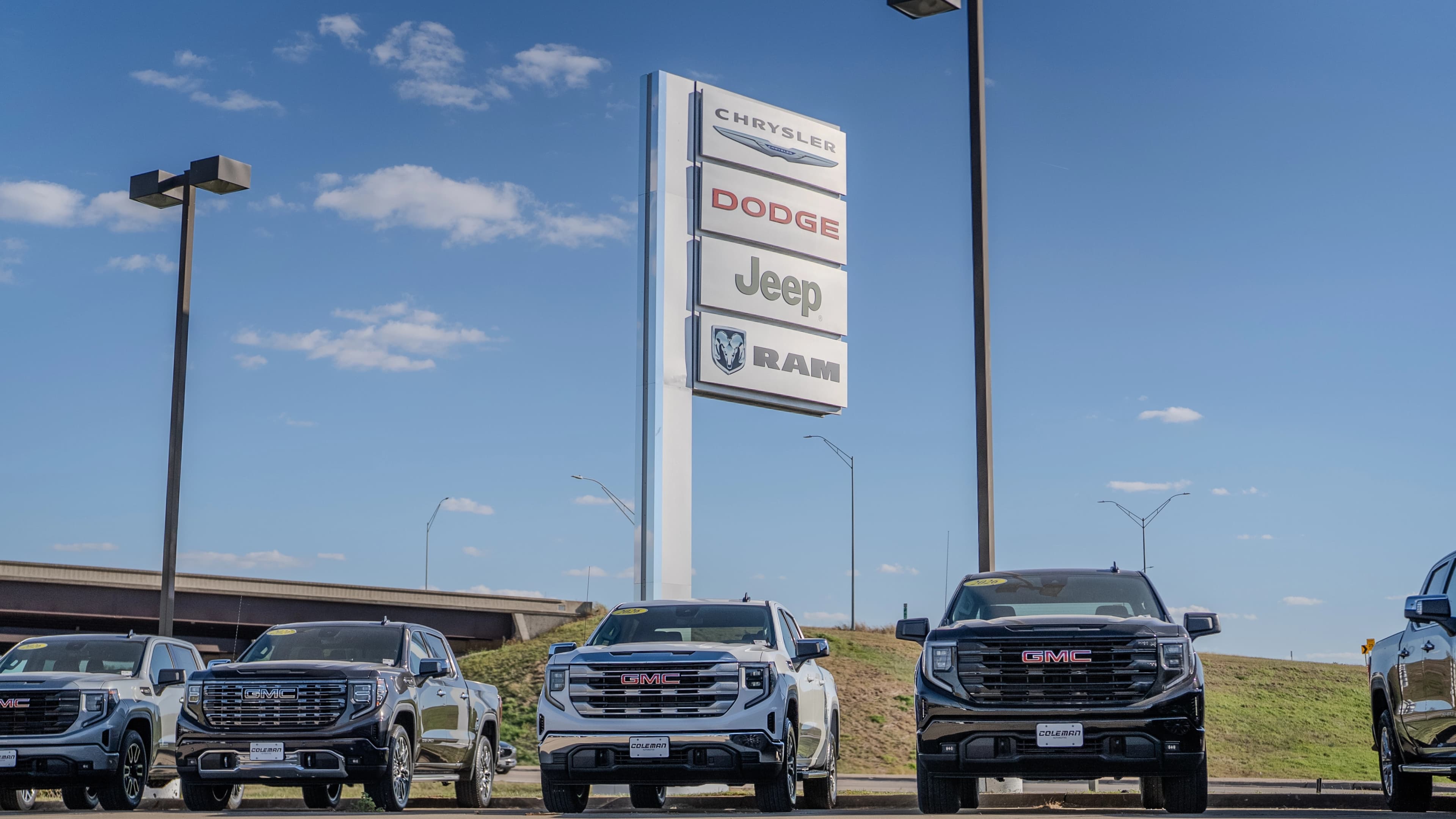
Every vehicle on the lot is collateralized inventory financed through a floor plan line. Photo: Sweet Dreams US LLC
Floor Plan Financing Explained: The Hidden Cost of Holding Inventory
Every new car on the lot is borrowed money. The interest meter runs every day until it sells — and how a dealer manages that meter separates good operators from great ones.
Walk onto any new-car lot in America and look at the rows of trucks, SUVs, and sedans. To a customer, it looks like a showroom. To an operator, it looks like a balance sheet — millions of dollars of borrowed money parked in the sun, accruing interest every day until a buyer drives one off the lot. This is floor plan financing, and it is the single most important piece of working-capital plumbing in the franchise dealer business.
For an investor underwriting a dealership, understanding floor plan is non-negotiable. It dictates how much capital actually has to sit in the store, how sensitive the P&L is to interest rates, and — most importantly — how much margin a disciplined operator can manufacture out of thin air just by managing the line well.
What Floor Plan Financing Actually Is
A floor plan is a revolving line of credit collateralized by vehicle inventory. When a manufacturer ships a new vehicle to the dealer, the floor plan lender pays the wholesale invoice directly to the OEM. The dealer takes physical possession of the unit, and the lender records a lien against that specific VIN. The dealer now owes the lender the wholesale cost plus accrued interest, and the loan is paid off the day the vehicle retails — typically within 24 to 72 hours of the sale.
Floor plan lines are sized to inventory. A store carrying 300 new units at an average cost of $35,000 needs a line capable of supporting roughly $10.5 million in outstanding principal. The line is monitored almost continuously — most lenders run weekly or bi-weekly audits where a third-party inspector physically verifies that every financed VIN is on the lot and accounted for. Floor plan is not optional credit. Without it, a dealer cannot take delivery of inventory, and without inventory there is no business.
There are three primary categories of floor plan provider. Captive lenders — Ford Motor Credit, GM Financial, Toyota Financial Services, Stellantis Financial — are owned by the OEMs and built specifically to floor their own brands. Commercial banks like JPMorgan, Wells Fargo, and Huntington run dedicated dealer commercial services groups. Specialty independents like NextGear, Westlake Flooring, and Automotive Finance Corporation focus on used inventory and on dealers the captives and banks don’t want. Most franchise stores carry a primary captive line for new vehicles and a secondary line for used.
How the Mechanics Work — From Truck Delivery to Customer Sale
The lifecycle of a floor-planned vehicle looks like this. A unit is built at the OEM plant and assigned to the dealer. The transport carrier drops it at the store, the receiving manager inspects it, and the VIN is entered into the dealer management system. That entry triggers a draw on the floor plan line — the lender wires the wholesale invoice amount to the manufacturer, and the dealer’s outstanding balance ticks up by the cost of that vehicle.
From that moment on, the meter is running. Interest accrues daily on the outstanding principal, calculated against a rate that almost always floats with Prime. A creditworthy, well-capitalized dealer might be priced at Prime plus 1%. A weaker store, or one being floored by a specialty lender, might be at Prime plus 3% or 4%. With Prime currently sitting in the mid-7% range, that means new-car floor plan rates of roughly 8% to 11%, depending on the dealer.
When a customer buys the car, the deal funds, and the payoff to the floor plan lender is one of the first wires out the door — usually within one to three business days. The lien is released, the VIN comes off the line, and the principal balance drops by exactly the wholesale cost of that unit. The dealer keeps everything between the wholesale cost and the retail selling price, minus the interest that accrued while the vehicle sat on the lot. That last number — interest accrued — is where operator skill shows up.
The Cost Curve: Why Day 91 Is Different From Day 30
Floor plan lenders do not want vehicles sitting on the line forever. Aged inventory is risky inventory — the longer a unit sits, the more likely it is to be marked down, damaged, or wholesaled at a loss. To manage that risk, every floor plan agreement contains a curtailment schedule, which is essentially a forced principal paydown timeline. Curtailments are commonly triggered at day 90, 180, and 270, with the dealer required to pay down a percentage of principal at each milestone whether the vehicle has sold or not.
Aged units also carry a higher rate. A unit past its first curtailment date frequently moves from Prime plus 1% to Prime plus 3% or worse, and at the second curtailment the lender may reprice it again or demand a 25%–50% principal paydown out of cash. So the operator is hit twice — they are paying more interest on a higher-rate balance, and they are pulling cash off the balance sheet to satisfy the curtailment. A vehicle that should have sold in 60 days and instead sits for 200 can erase its entire gross margin and then some.
This is why aged inventory is the silent killer of dealership profitability. It does not show up in a single line on the P&L; it shows up as compressed front-end gross, elevated floor plan expense, and depressed cash flow all at once. A store with 300 units in inventory and 30 of them past curtailment is, in effect, paying a tax on its own poor ordering discipline.
By the Numbers
The Floor Plan Math
Average new-car floor plan line at a single rooftop: $8M–$15M
Typical inventory: 200–400 new units at $30K–$45K average cost
Current rate environment: Prime + 1% to Prime + 4% (≈8%–11% all-in)
Daily interest cost on a $10M line at 8%: roughly $2,200 per day
Annualized: $700K–$900K of floor plan expense per rooftop
Curtailment milestones: typically day 90, 180, and 270
Manufacturer Floor Plan Assistance: The Window That Matters
Almost every OEM offers a program called floor plan assistance, or FPA. In its simplest form, the manufacturer reimburses the dealer for floor plan interest on new inventory for a defined window after delivery — commonly the first 30 to 90 days, depending on the brand and the model. For many manufacturers, FPA is paid as a flat per-unit credit against the wholesale invoice; for others, it’s a true interest reimbursement keyed to the actual rate the dealer is paying.
The economic implication is enormous. A vehicle that turns inside its FPA window costs the dealer effectively zero in floor plan interest. A vehicle that sits one day past it starts costing real money. So the question of whether a store sells most of its inventory inside the FPA window — versus burning through it and paying interest out of pocket — is a single-digit percentage difference that can move hundreds of thousands of dollars to the bottom line.
Sophisticated operators model FPA windows by model and by brand and use that data to inform how they order, how they price, and which units they push their sales team to move first. The dealers who don’t track it leave manufacturer money on the table every month — a recurring leak that compounds across hundreds of vehicles a year.
What Great Operators Do Differently
Floor plan discipline is not glamorous, but it is the most reliable margin lever in the new-car business. The operators who run it well do four things consistently. First, they order with discipline — they build their inventory mix around the units that actually sell in their market, not the units the factory wants to push. A store that orders correctly carries fewer units and turns them faster, which means a smaller line, less interest, and more time inside the FPA window.
Second, they enforce ruthless aged-unit policies. The best operators have a written rule — once a unit hits day 75 or day 80, it is repriced, advertised harder, or moved to wholesale before curtailment hits. They would rather take a small front-end haircut than pay a 200-day interest tab and a forced principal paydown. Third, they own their FPA windows like a calendar — every salesperson and every desk manager knows which units are about to age out and prices and incentivizes accordingly. Fourth, they treat the floor plan statement as a P&L document, not a back-office report. The CFO, the GM, and the variable ops director all read it together every month.
These habits sound mundane. They are also the reason two stores selling identical product mixes can have new-car gross profit per unit that differs by $400 or more. That difference is almost entirely a function of how the floor plan is managed.
Prime Insight
Coleman Prime models floor plan exposure as a first-class line item during diligence — not a footnote.
We pull at least 24 months of floor plan statements, reconcile them against curtailment schedules, and rebuild interest expense at our forward rate assumptions.
We separate true cost of carry from manufacturer FPA reimbursement to see which stores are actually being subsidized — and which are leaking margin every month.
We model post-close inventory targets the same way: smaller, faster-turning lines that fit the operating playbook Kyle Coleman’s team brings to every acquisition.
The result is a much more accurate view of underwritten cash flow — and a clear list of operational fixes we can implement on day one.
Why Floor Plan Discipline Drives Margin Expansion
When Coleman Prime evaluates an acquisition target, floor plan is one of the first things we look at — not because it is the largest expense, but because it is the most fixable. New ownership with a strong operating playbook can move a store’s floor plan expense by 15% to 25% in the first twelve months, just by cleaning up ordering, tightening curtailment management, and capturing more FPA. None of that requires capex. It requires discipline.
That improvement falls almost entirely to the bottom line. On a typical rooftop, a 20% reduction in floor plan expense is worth roughly $150K to $200K of incremental annual EBITDA, and at a fund-level multiple, that translates into millions of dollars of enterprise value created out of nothing more than better day-to-day operating habits.
This is the quiet truth of the dealer business. The flashy parts — new model launches, big advertising campaigns, sales contests — are visible to everyone. The real money is in the boring parts: how fast inventory turns, how aged units are managed, and how tightly the floor plan is run. For investors who want to understand what makes a dealership a great asset, start with the floor plan. Everything else follows from it.
Prime Dealer Equity Fund is a private equity vehicle co-investing with Coleman Automotive Group in the acquisition and optimization of automotive dealerships across the United States.
For qualified investor inquiries:
→ Contact our investor relations team