
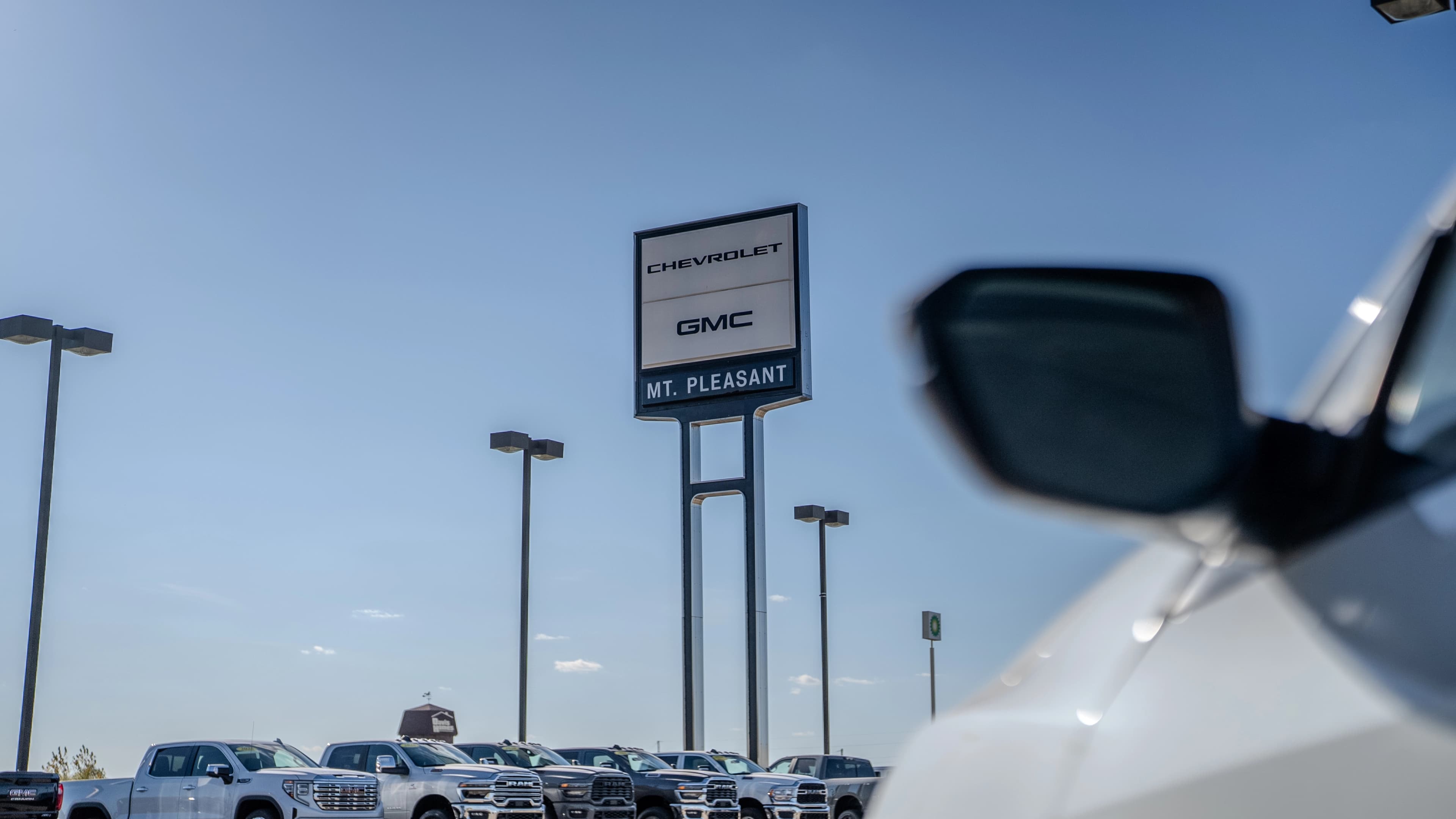
Manufacturer payments — holdback, allocation incentives, stair-step bonuses — are where new-vehicle profit actually lands. Photo: Sweet Dreams US LLC
OEM Allocation, Holdback, and Stair-Step Bonuses: How Manufacturers Pay Dealers
Most outsiders think dealers make money on the spread between invoice and MSRP. The reality is layered — and most dealer profit on new vehicles comes from manufacturer payments invisible to the customer.
Walk a customer through a new-vehicle deal and the math looks transparent. The window sticker shows MSRP. The invoice — which most dealers will now show on request — sits a few thousand dollars below it. The difference, the customer assumes, is the dealer's profit. It's a clean story, and it has been the public-facing version of the new-car business for as long as the new-car business has existed.
It is also wrong in almost every important way. The gap between invoice and MSRP on most mainstream nameplates today is 4–7%, and on a meaningful share of transactions the dealer transacts at or below invoice. If that spread were the actual profit, new-vehicle departments would not be sustainable businesses. They are sustainable because, layered underneath the visible numbers, the manufacturer pays the dealer through a stack of separate programs that the customer never sees and the F&I paperwork rarely names.
Holdback, allocation, dealer cash, stair-step bonuses, floor plan assistance, co-op advertising, certified pre-owned program payments — each is its own envelope, each has its own rules, and each rewards a slightly different operator behavior. Read the program manuals carefully and the math works. Skim them and you leave hundreds of dollars per unit on the table. This chapter is about that hidden layer, why it exists, and why operator skill at capturing it is one of the larger sources of variance in dealership profitability.
The Layered Economics of New-Vehicle Profit
Start with the visible spread. On a $50,000 MSRP vehicle with a 5% mark-up to invoice, the dealer has $2,500 of front-end gross to work with before any incentives, before any market adjustments, and before any negotiation. In a competitive market — and almost all metro markets are competitive — that $2,500 erodes quickly. Half of it is often gone before the customer signs. On many transactions the dealer ends up at break-even or worse on the front-end gross alone.
If that were the entire story, no rational operator would stock new vehicles. The reason they do is that the front-end gross is the smallest of four or five separate income streams attached to the same transaction. Holdback arrives a quarter later. Dealer cash applies to specific units. A stair-step bonus may convert that money-losing deal into a meaningful contributor once the monthly volume target is hit. Floor plan credits, co-op accruals, and certified-program payments stack on top. The vehicle that lost $400 on the line is paying $1,800 by the time the books close on the quarter.
This is why two stores selling identical inventory in identical markets can post wildly different new-vehicle profitability. The deal logs look similar. The program-capture spreadsheets do not. The operator who reads every program memo, who structures month-end inventory placement around the next stair-step tier, who tracks holdback accruals like the recurring revenue stream they are, captures money that the operator who treats the new-car department as a spread business never sees.
Holdback: The Most Reliable Manufacturer Payment
Holdback is the foundation. Almost every domestic and import franchise operates some version of it. The mechanism is straightforward: a percentage of MSRP — commonly 1–3% depending on the brand, occasionally higher on specific lines — is added to the invoice price the dealer pays at delivery, then rebated back to the dealer after the vehicle retails. Payment is typically quarterly. The customer never sees it. The dealer treats it as a near-guaranteed accrual on every unit that turns.
On a $50,000 MSRP vehicle with 2% holdback, the dealer is collecting $1,000 per unit purely on holdback once the unit sells. Across a store that retails 800 new units a year, that is $800,000 of nearly automatic gross — a sum larger than the entire front-end gross profit on those same units in a typical month. Holdback also serves a balance-sheet function: it offsets the floor plan interest the dealer pays while the unit sits in inventory, smoothing the carry cost we covered in the chapter on floor plan financing.
Because holdback is paid on every unit, it does not differentiate operators. It is the floor. What differentiates operators is what sits above it — the programs that reward velocity, mix, model focus, and adherence to the manufacturer's go-to-market strategy. Holdback pays you for selling. The rest of the stack pays you for selling the way the manufacturer wants you to sell.
Allocation: How Inventory Becomes a Reward
Before any incentive math runs, the manufacturer makes a more fundamental decision: which dealers get inventory of the hot units, and which dealers get the leftovers. Allocation is the system that distributes available production across the dealer network, and it is one of the most important and least understood levers in the franchise relationship. Top-performing stores receive disproportionate allocation of high-demand models. Underperforming stores get less of what sells and more of what doesn't.
Allocation is calculated on rolling formulas — typically blends of recent sales velocity, days' supply, market share against objective, and CSI scores. Hit your numbers and the next batch of full-size SUVs, performance trims, or limited-production specialty units flows to your store before it flows to the dealer down the road. Miss them and you find yourself stocking sedans you cannot sell while your competitor stocks the trucks customers actually want.
The compounding effect is significant. Better allocation of in-demand units produces faster turn, stronger gross, and higher CSI — which in turn produces better allocation in the next cycle. Dealers who lose the allocation race watch their inventory mix degrade, their floor plan interest expand on slow movers, and their front-end gross collapse. This is one of the largest reasons performing rooftops are worth multiples of underperforming rooftops on identical points in identical markets — the inventory pipeline is not the same.
Dealer Cash and Stair-Step Bonuses
Layered on top of holdback are the variable incentive programs. Dealer cash is the cleanest example: a per-unit payment, advertised internally to the dealer network, attached to specific models or specific inventory. "$2,500 dealer cash on remaining 2025 inventory" is a typical memo. The customer does not see it. The dealer applies it directly to the back end of the deal — meaning the same vehicle that looked like a thin transaction at the desk becomes a $2,500-per-unit margin contributor in the back office.
Customer cash is the opposite — incentives the customer sees on the window, the rebates and APR specials advertised in the manufacturer's national campaigns. Customer cash drives floor traffic and closes deals, but it is not dealer profit. The dealer's job is to capture the traffic the customer cash creates without giving up the margin that dealer cash and the rest of the stack provides. Mixing the two up is a common mistake among operators new to the franchise model.
Stair-step bonuses are where the program math gets aggressive. The structure is tiered: hit 60 units in the month and earn $200 per unit on every unit sold. Hit 80 and the rate jumps to $400 on all 80, paid retroactively. Hit 100 and the rate jumps again. The retroactive nature is what makes the math extreme — selling the 81st unit to clear the next tier can be worth $16,000 on the prior 80 units, even if the 81st unit itself is sold at break-even. Operators who model this correctly chase the next tier hard at month-end. Operators who don't model it leave the bonus on the table and watch a competitor down the street collect it.
By the Numbers
How Manufacturers Pay Dealers
1. Holdback — 1–3% of MSRP rebated quarterly on every unit retailed
2. Allocation — preferential inventory of hot models for top performers
3. Dealer cash — per-unit incentives on specific models, paid to the dealer not the customer
4. Stair-step bonuses — tiered volume incentives, retroactive on all units once a threshold is hit
5. Floor plan assistance — manufacturer credits offsetting carrying cost on aged inventory
6. Co-op advertising — reimbursement of dealer-paid advertising, typically a percentage of new gross
Co-op Advertising and the Other Programs
Beyond the headline programs, a half-dozen smaller envelopes contribute meaningfully to the bottom line at well-run stores. Co-op advertising reimburses a portion of dealer-paid marketing spend — often a percentage of new-vehicle gross or a fixed quarterly pool — provided the dealer follows the manufacturer's brand guidelines, runs approved creative, and submits documentation on time. Stores that build a disciplined co-op claims process recover hundreds of thousands of dollars a year. Stores that don't, leave it sitting in the manufacturer's account.
Floor plan assistance — covered in detail in the chapter on floor plan financing — is another quiet contributor. On select inventory, the manufacturer reimburses some or all of the floor plan interest for a defined window, effectively subsidizing the carry cost on units they are pushing into the network. Certified pre-owned program payments add another layer on used: per-unit payments for inspecting, reconditioning, and merchandising trade-ins under the manufacturer's CPO standard. Service training reimbursements, facility allowances tied to brand-image compliance, and parts wholesale incentives round out the stack.
None of these programs is dramatic on its own. A facility allowance of $30,000 a quarter does not rebuild a P&L. A co-op accrual that recovers 60% of digital ad spend does not by itself transform marketing economics. But the cumulative effect of capturing every program the franchise offers — versus ignoring half of them — is the difference between a store running at industry-average return on sales and a store running well above it. Program capture is a quiet, high-discipline source of operating alpha.
Why Incentive Capture Is an Operating Discipline
The OEM playbook is intentional. Manufacturers structure these layers to drive specific behaviors — push aged inventory, hit market-share goals against a defined competitor, modernize facilities to brand standard, sell more of the high-margin trims that lift the manufacturer's own ASP. Every program memo is a behavior the manufacturer wants reinforced, paid for in cash. The dealer who reads the memo carefully and aligns the store to it captures the money. The dealer who doesn't, watches the same money flow to a competitor who did.
Operator skill at capturing these incentives can be worth $1,000–$2,000 per unit retailed, year in and year out. On a 1,200-unit-per-year store, that is a $1.2–$2.4 million swing in store-level pre-tax profit purely from program-capture discipline — independent of what the front-end desk negotiates, independent of macro demand, independent of how F&I performs on the same units. It is one of the cleanest examples in retail of why operator quality is not a soft factor. It is a quantifiable line item.
For an investor underwriting a dealership acquisition, this is one of the clearest sources of post-close upside. A target rooftop running below its peer set on incentive capture is not a structurally weaker store — it is an under-managed one. A buyer with a disciplined program-capture process applied to the same inventory and the same franchise produces materially better economics out of the gate, before any growth, any pricing change, or any expense reduction. The new-vehicle profit pool was always there. The prior operator was leaving most of it sitting at the manufacturer.
Prime Insight
Coleman Prime models incentive capture explicitly during diligence — pulling the prior operator's program-claim history, benchmarking it against the manufacturer's published rates and our own captured benchmarks at Coleman Automotive Group, and quantifying the gap as identified post-close upside.
After acquisition, our operating playbook pushes program capture to the top of the controller's monthly close. Co-op claims, stair-step modeling, dealer-cash sweeps, and allocation-formula tracking become recurring routines — not afterthoughts. The result is a consistent, measurable lift in new-vehicle gross that compounds quarter after quarter.
Prime Dealer Equity Fund is a private equity vehicle co-investing with Coleman Automotive Group in the acquisition and optimization of automotive dealerships across the United States.
For qualified investor inquiries:
→ Contact our investor relations team